The Fossils That Captured “The Day” the Dinosaurs Died! The Truth Behind the Asteroid Impact
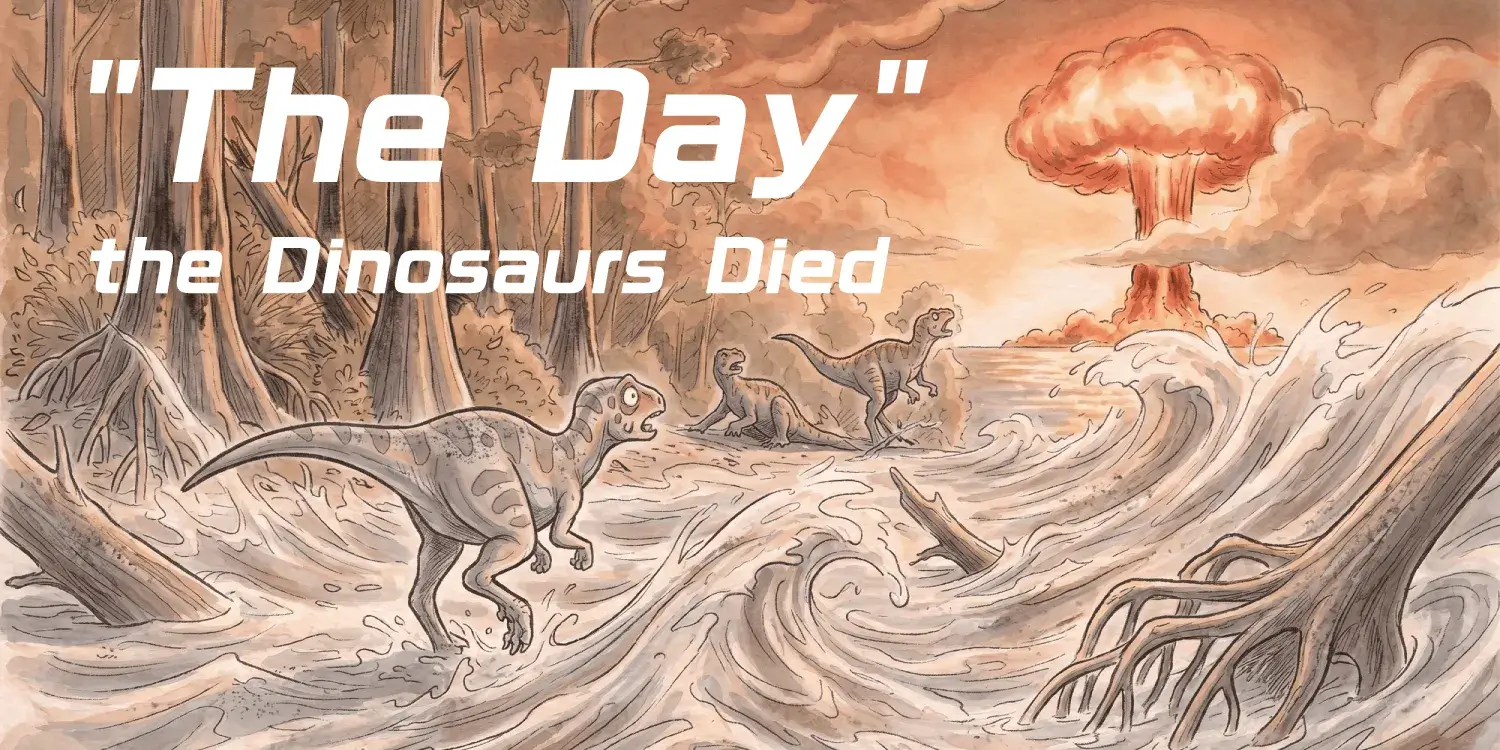
About 66 million years ago, a decisive event occurred that marked the end of the Cretaceous period.
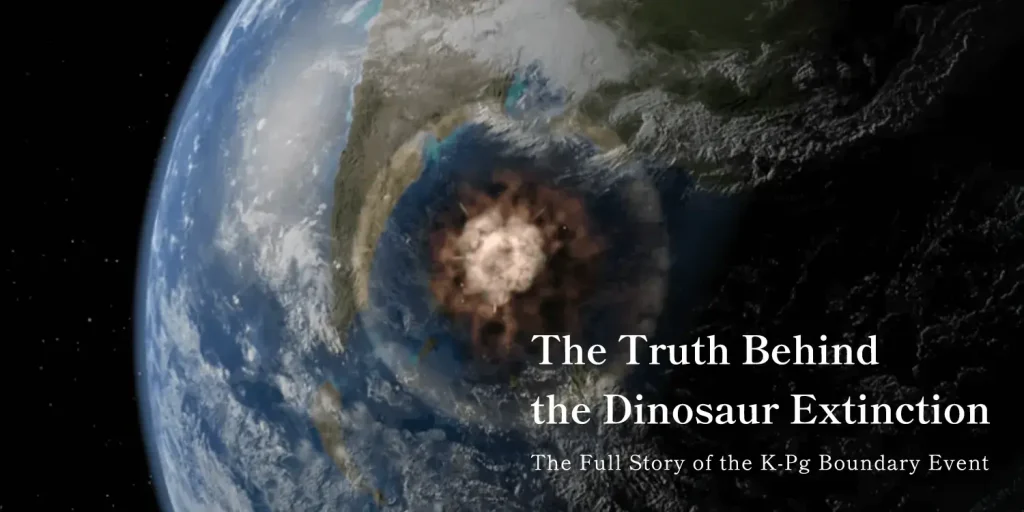
A massive asteroid (meteorite) measuring about 12 kilometers (7.5 miles) in diameter crashed off the coast of the Yucatan Peninsula in Mexico, triggering global climate change that is believed to have wiped out approximately 75% of all plant and animal life on Earth, including the dinosaurs.
An extraordinary fossil site has been discovered in North Dakota, USA, perfectly preserving the forms of dinosaurs and diverse creatures that died in the exact moment of impact—on the very “day” this mass extinction began.
Capturing the Moment of the Asteroid Impact! The Chaotic Fossil Layer “Tanis”
Although “Tanis” is located some 3,000 kilometers (about 1,860 miles) away from the impact site on the Yucatan Peninsula (the Chicxulub crater), it suffered unimaginable devastation.
Ecosystem Destruction by a Massive Tsunami
The immense energy of the asteroid impact violently shook the continental plates, causing a massive earthquake.
Accompanying this, large-scale surges (about 9.1 meters or 30 feet high) were triggered in all bodies of water, rushing inland from the river mouths.
A Fossil Layer Where Terrestrial and Aquatic Life Mingle
As terrestrial and aquatic life were indiscriminately swallowed up, a chaotic fossil layer was formed at Tanis.
Burnt conifer trunks mixed with fish, the remains of small mammals, Triceratops skin, mosasaur bones, and pterosaur embryos still inside their eggs have been excavated one after another.
Robert DePalma from the University of Manchester in the UK, who led the excavation, expressed his awe at the incredible state of preservation: “It’s like looking at a scene from a movie. It makes you feel like you’ve traveled back in time to that era.”
Decisive Evidence! “Glass Spheres” Lodged in the Gills of Sturgeons
The key that convinced the research team that this geological layer represents “the exact day of the asteroid impact” lay in the fish fossils.
A Rain of Tektites (Glassy Spherules of Melted Rock)
Vaporized rock and dust, heated intensely by the asteroid impact, were blasted high into the sky. They cooled and solidified in the air, forming tiny glass spheres (tektites) about 1 millimeter in diameter, which then rained down violently on the land and water surfaces.
Asphyxiated Sturgeons
The gills of the fossilized sturgeons and paddlefish were found packed with these tektites, which they had swallowed along with the water.
Confirmation of Extraterrestrial Material
Particles recovered from fossilized tree resin (amber) were analyzed at a state-of-the-art X-ray facility, and the results showed that their chemical composition perfectly matched that of the asteroid impact in Mexico.
It was also confirmed that they were rich in “iridium,” a metal rare on Earth but common in asteroids.
A First in History? A Dinosaur Leg Killed “Instantly” by the Asteroid’s Impact
The most sensational discovery at Tanis is the fossilized “dinosaur leg,” complete with perfectly preserved scaly skin.
Through examination by Professor Paul Barrett, an expert in ornithischian dinosaurs, it was identified as belonging to a Thescelosaurus, a herbivorous dinosaur measuring about 3 to 4 meters (9.8 to 13.1 feet) in length.
The Possibility of Instant Death from the Asteroid
The biggest shock brought by this fossil is its cause of death.
The leg itself was perfectly healthy, showing no signs of disease or missing parts that had been bitten off by another carnivorous animal.
However, the leg looked as if it had been “ripped off in an instant by some tremendous impact.”
The First Physical Evidence in History?
In other words, it is highly likely that this dinosaur had its leg torn off by the violent shockwaves and debris flows caused by the asteroid impact, resulting in “almost instant death.”
If true, this would be the first physical evidence in the history of paleontology of a “fossil of a dinosaur that died from the direct impact of the asteroid strike.”
The Scientific Community’s Reaction and Future Verification
The discovery at Tanis was made public in a US journal in 2019 and was even broadcast in a BBC documentary, causing a massive stir worldwide.
However, some cautious voices have also been raised from within the scientific community.
Professor Steve Brusatte of the University of Edinburgh in the UK acknowledges the fish that swallowed the glass spheres as evidence, but remains skeptical about whether the dinosaur leg truly belongs to a creature that died “on that specific day.”
He points out, “It’s possible that a fossil buried in the ground after dying years before the impact was dug up by the violent waves and debris flows of that day, and then reburied, making it look as though it died at the same time.”
Such significant discoveries need to be published as peer-reviewed papers in academic journals and undergo evaluation by independent experts.
The excavation team has promised to present even more evidence in the future, and attention is focused on the outcome of the scientific community’s verification process.
Summary
The fossil site unearthed at Tanis in North Dakota is a time capsule that froze the extremely brief “moment of extinction”—lasting just a few tens of minutes to a few hours—that marked the end of the Mesozoic Era.
Glass spheres packed into the gills of sturgeons, and the leg of a Thescelosaurus seemingly ripped off by the impact of the asteroid.
If all of these fossils are truly victims of that “tragic day 66 million years ago,” it means we have finally obtained a way to directly witness the end of the age of the dinosaurs.

![[Baby Yingliang] A Miracle of Perfect Preservation! The Baby Dinosaur Fossil Revealing the Evolutionary Link to Birds](https://dinosaurmuseum.jp/wp/wp-content/uploads/eyecatch_baby-yingliang_en-1024x512.webp)








![[Latest Research] What Was the Function of Spinosaurus's Giant "Sail"? Exploring the Mysteries of Thermoregulation and Underwater Locomotion](https://dinosaurmuseum.jp/wp/wp-content/uploads/eyecatch_spinosaurus-sail-function_en-1024x512.webp)
![[Latest Discovery] A Third Type of Skin, Neither Scales Nor Feathers? Meet "Haolong dongi," a New Dinosaur Species Covered Entirely in Spikes](https://dinosaurmuseum.jp/wp/wp-content/uploads/eyecatch_dinosaur-spiky-skin-discovery_en-1024x512.webp)