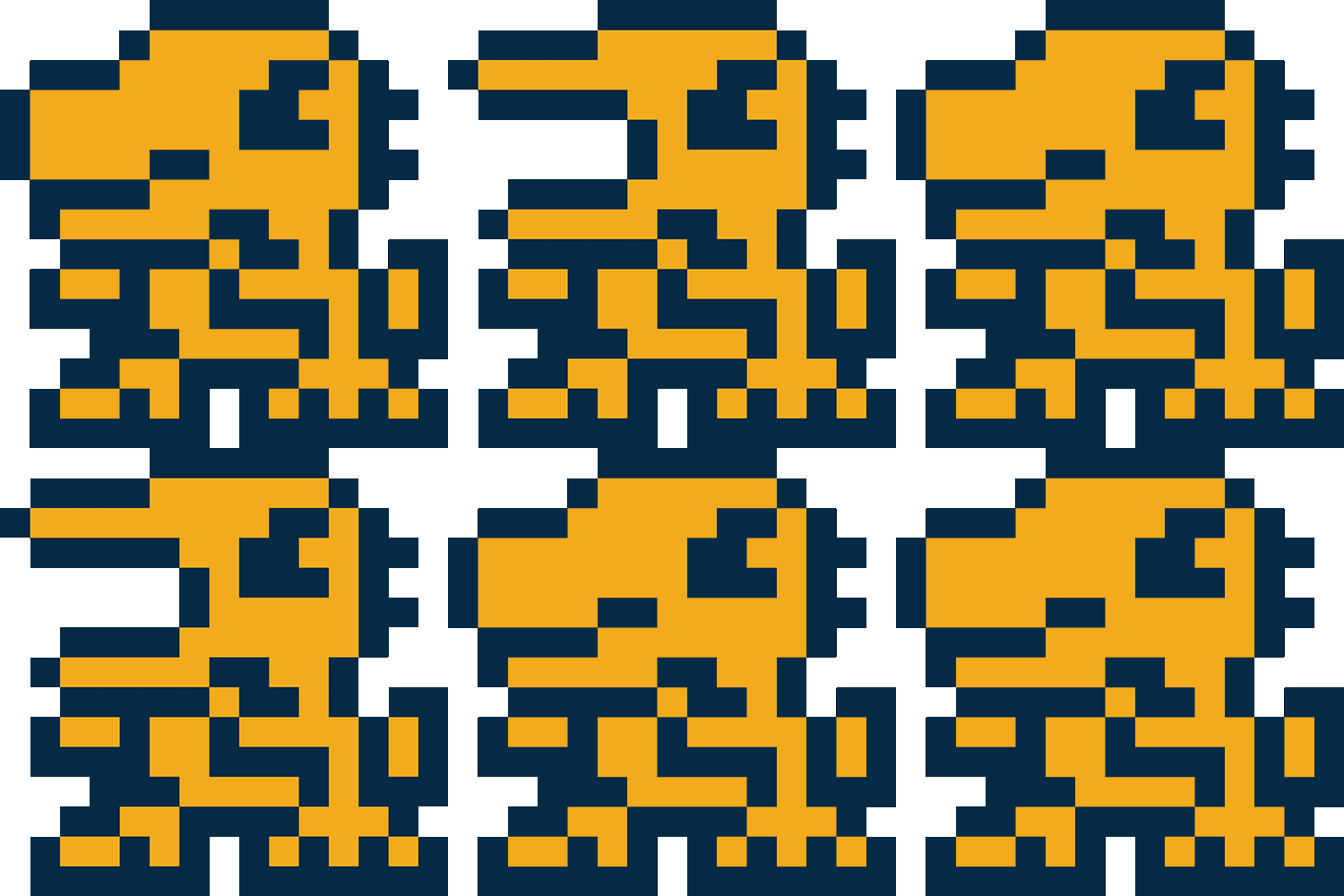
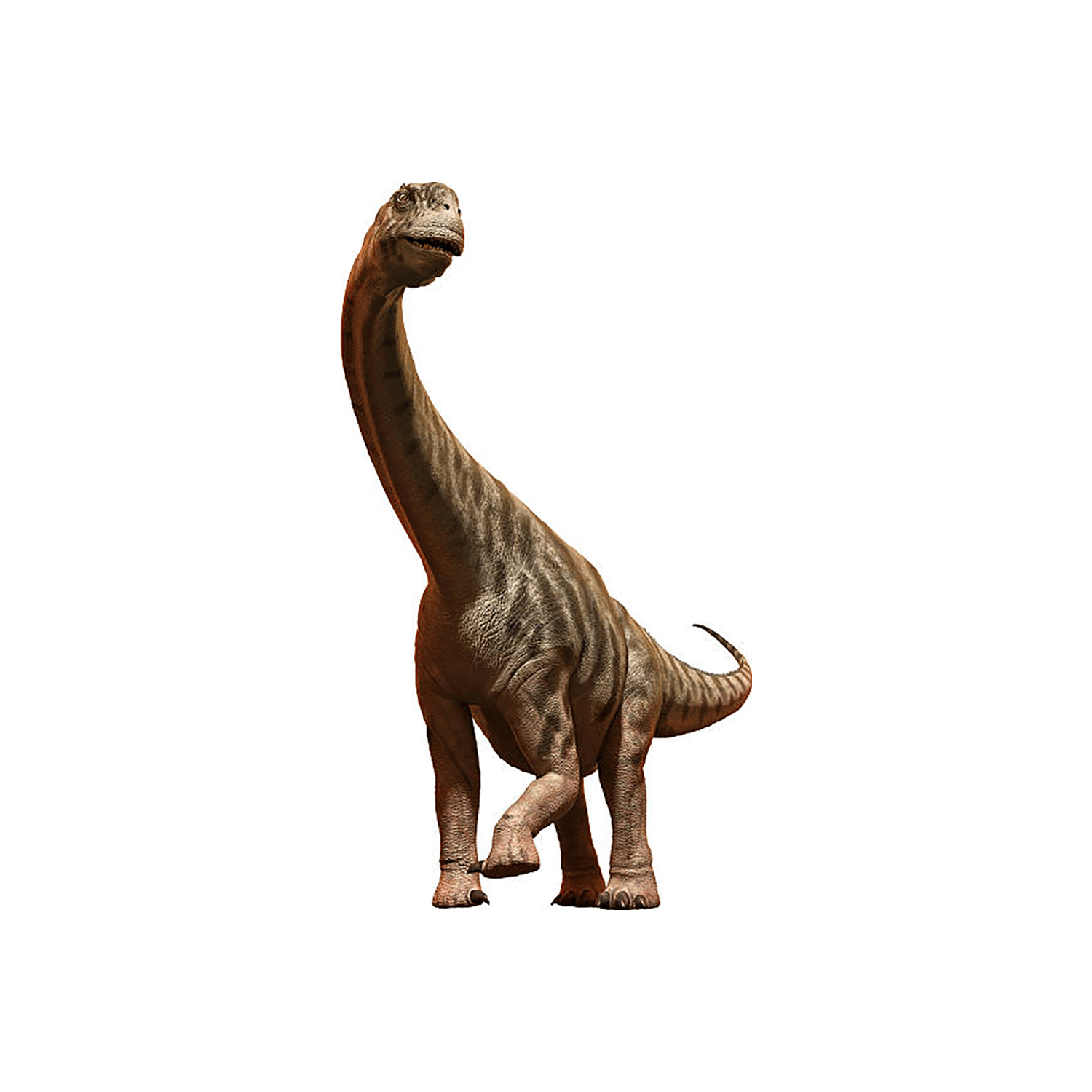
Dicraeosaurus
Name Origin
Forked lizard
Family
Dicraeosauridae
Classification
Diapsida, Saurischia, Sauropodomorpha
Habitat (Discovery Location)
Tanzania
Period
Late Jurassic
Length
Approximately 12 to 15 meters
Weight
Approximately 10 tons
Diet
Herbivore (Plant-eater)
You might also like... 

-
 Segisaurus
- Classification
- Theropods
- Characteristics
- Carnivorous
- Era
- Jurassic period
- Rhamphorhynchus
- Classification
- Flying reptiles
- Characteristics
- Carnivorous
- Era
- Jurassic period
- Ornitholestes
- Classification
- Theropods
- Characteristics
- Carnivorous
- Era
- Jurassic period
- Ajancingenia
- Classification
- Theropods
- Characteristics
- Carnivorous
- Herbivorous
- Omnivorous
- Era
- Cretaceous period
-
Sponsored Links
-
Sponsored Links



![[Latest Research] What Was the Function of Spinosaurus's Giant "Sail"? Exploring the Mysteries of Thermoregulation and Underwater Locomotion](https://dinosaurmuseum.jp/wp/wp-content/uploads/eyecatch_spinosaurus-sail-function_en-1024x512.webp)
![[Latest Discovery] A Third Type of Skin, Neither Scales Nor Feathers? Meet "Haolong dongi," a New Dinosaur Species Covered Entirely in Spikes](https://dinosaurmuseum.jp/wp/wp-content/uploads/eyecatch_dinosaur-spiky-skin-discovery_en-1024x512.webp)

Description
Dicraeosaurus, which lived in Late Jurassic Tanzania, is a sauropodomorph belonging to the same lineage (the superfamily Diplodocoidea) as the familiar giant dinosaur Diplodocus.
It was described in 1914 by German paleontologist Werner Janensch, and to date, two species have been named: hansemanni and sattleri.
The Unique Form and Tail Indicated by the “Forked Lizard”
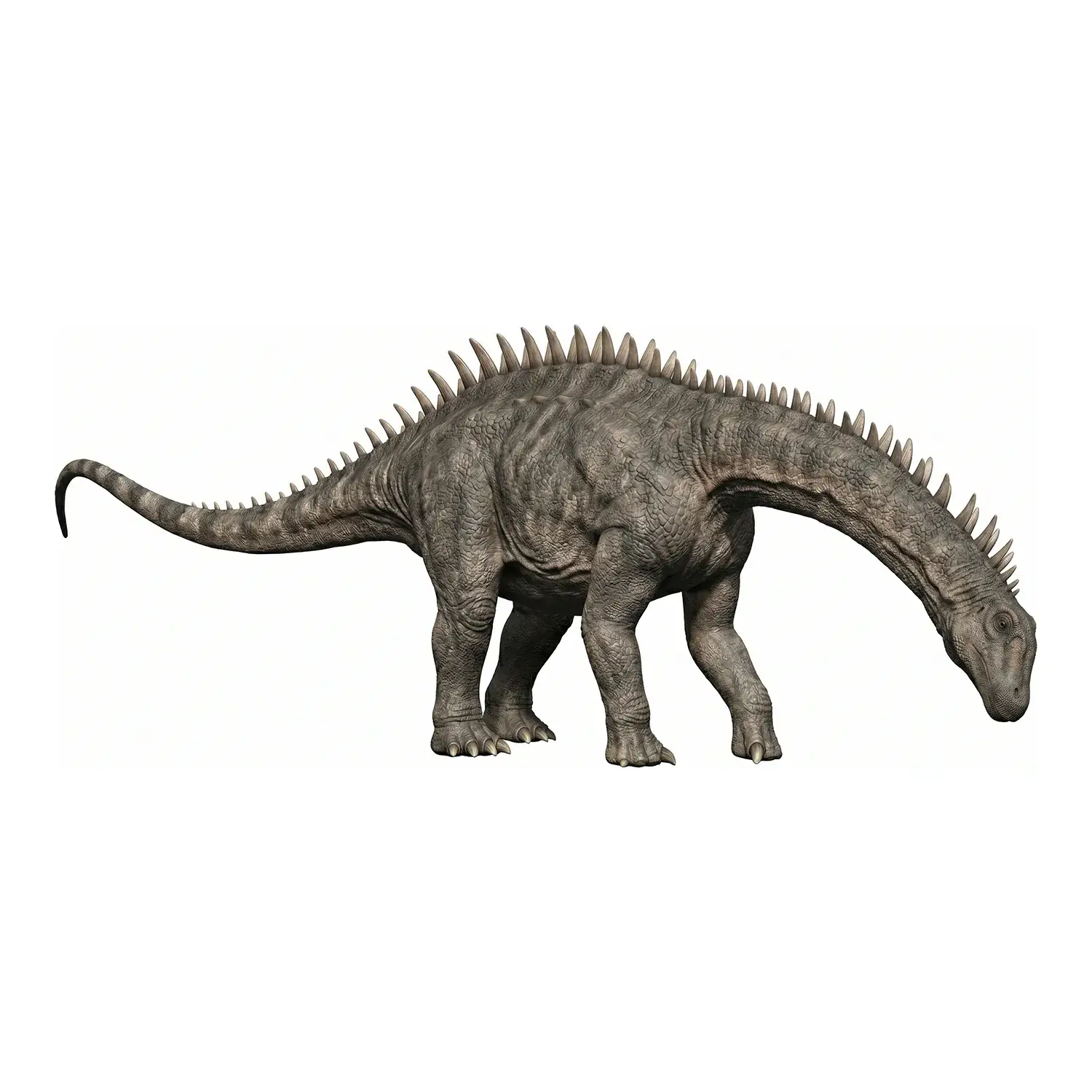
As its scientific name suggests, the most prominent feature of Dicraeosaurus is the tall, bifurcated (forked) spine-like projections on its neck and backbone (cervical and dorsal vertebrae).
A Silhouette Similar to Amargasaurus
Due to the spiky projections extending upward from its neck and back, at first glance, it closely resembled its close relative Amargasaurus, a sailed dinosaur from the same Dicraeosauridae family.
A “Whip-Like” Tail for Protection
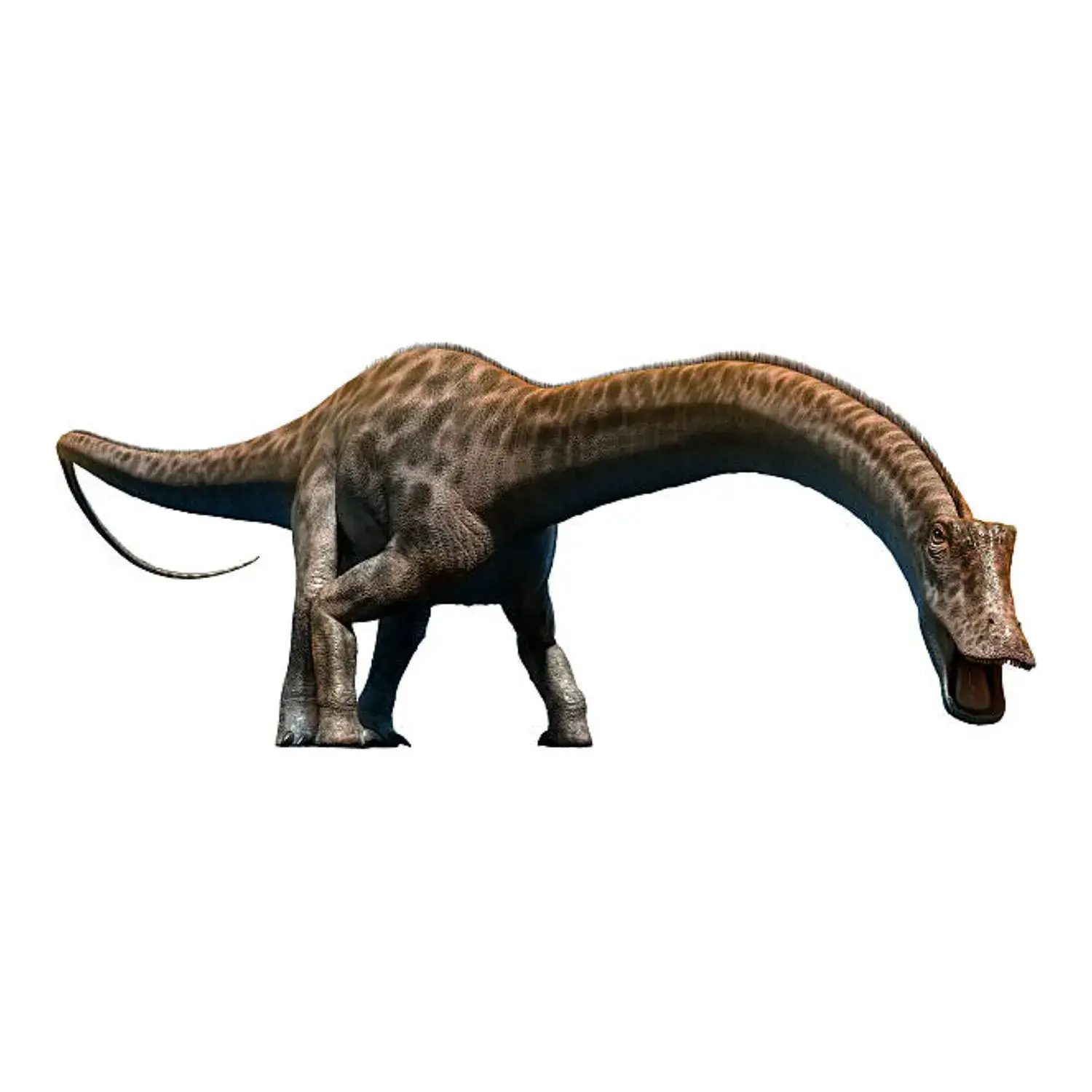
Its tail, which was much longer than its neck, extended backward like a long, slender whip.
It is believed that when attacked by predators such as carnivorous dinosaurs, it vigorously swung this long tail to defend itself.
An “Unusually Short Neck” and Small Body for a Sauropodomorph
When we think of sauropodomorphs, we typically picture towering giants with massive bodies and long necks, but Dicraeosaurus is a bit different.
Quite Small for a Sauropodomorph
With a total length of 12 to 15 meters (39 to 49 feet) and a weight of about 10 tons, it was not very large compared to giants like Diplodocus.
*Some sources mention the existence of an extremely small individual measuring 3 meters (10 feet) long.
A “Short Neck” That Couldn’t Be Raised
Its appearance is defined by its neck, which was built quite short for a sauropodomorph (though not as short as its close relative Brachytrachelopan, it still falls into the short category).
Its skeletal structure prevented it from lifting its head high, meaning its head was perpetually angled downward.
A Distinctive Head and “Niche Partitioning” for Peaceful Coexistence
Its somewhat large skull resembled that of Diplodocus, but it was longer, narrower, and extended forward like a platypus’s bill (similar to the features of Nigersaurus), with the unusual anatomical quirk of having its nostrils positioned above its eyes.
Exclusively Feeding on Ground-Level Plants
The features of a “short neck” and “downward-facing head” directly tied into their diet.
It is presumed that they fed on low-growing vegetation on or near the ground, rather than leaves high up in the trees.
“Niche Partitioning” With Giant Dinosaurs
From the Tendaguru Formation in Tanzania where its fossils were excavated, the tall, long-necked brachiosaurid Giraffatitan was also discovered.
Because the heights of the plants their mouths could reach were completely different, they could clearly “partition their food sources” (niche partitioning) and coexist peacefully while avoiding unnecessary competition.
Relatives That Spread Across the Globe Through Unique Evolution
Relatives sharing the traits of a “short neck and tall neck/back projections” like Dicraeosaurus include Amargasaurus and Rebbachisaurus.
From the Jurassic to the Early Cretaceous, these close relatives expanded their habitats widely, not only in Tanzania but also reaching Argentina, China, and the United States.
Diverging from other sauropodomorphs that simply evolved toward gigantism and longer necks, Dicraeosaurus specialized in eating the low-growing plants at its feet.
Its tall, bifurcated neural spines and short neck perfectly illustrate the fascinating diversity of uniquely evolved sauropodomorphs.