Nodosaurus
Name Origin
Knobbed lizard
Family
Nodosauridae
Classification
Diapsida, Ornithischia, Thyreophora
Habitat (Discovery Location)
United States
Period
Approximately 135 to 65 million years ago (Late Cretaceous)
Length
Approximately 6 meters
Diet
Herbivore (Plant-eater)
You might also like... 

-
 Carcharodontosaurus
- Classification
- Theropods
- Characteristics
- Carnivorous
- Era
- Cretaceous period
- Szechuanosaurus
- Classification
- Theropods
- Characteristics
- Carnivorous
- Era
- Jurassic period
- Eotyrannus
- Classification
- Theropods
- Characteristics
- Carnivorous
- Era
- Cretaceous period
- Phuwiangosaurus
- Classification
- Sauropods
- Characteristics
- Herbivorous
- Era
- Cretaceous period
-
Sponsored Links
-
Sponsored Links






![[Latest Research] What Was the Function of Spinosaurus's Giant "Sail"? Exploring the Mysteries of Thermoregulation and Underwater Locomotion](https://dinosaurmuseum.jp/wp/wp-content/uploads/eyecatch_spinosaurus-sail-function_en-1024x512.webp)
![[Latest Discovery] A Third Type of Skin, Neither Scales Nor Feathers? Meet "Haolong dongi," a New Dinosaur Species Covered Entirely in Spikes](https://dinosaurmuseum.jp/wp/wp-content/uploads/eyecatch_dinosaur-spiky-skin-discovery_en-1024x512.webp)

Description
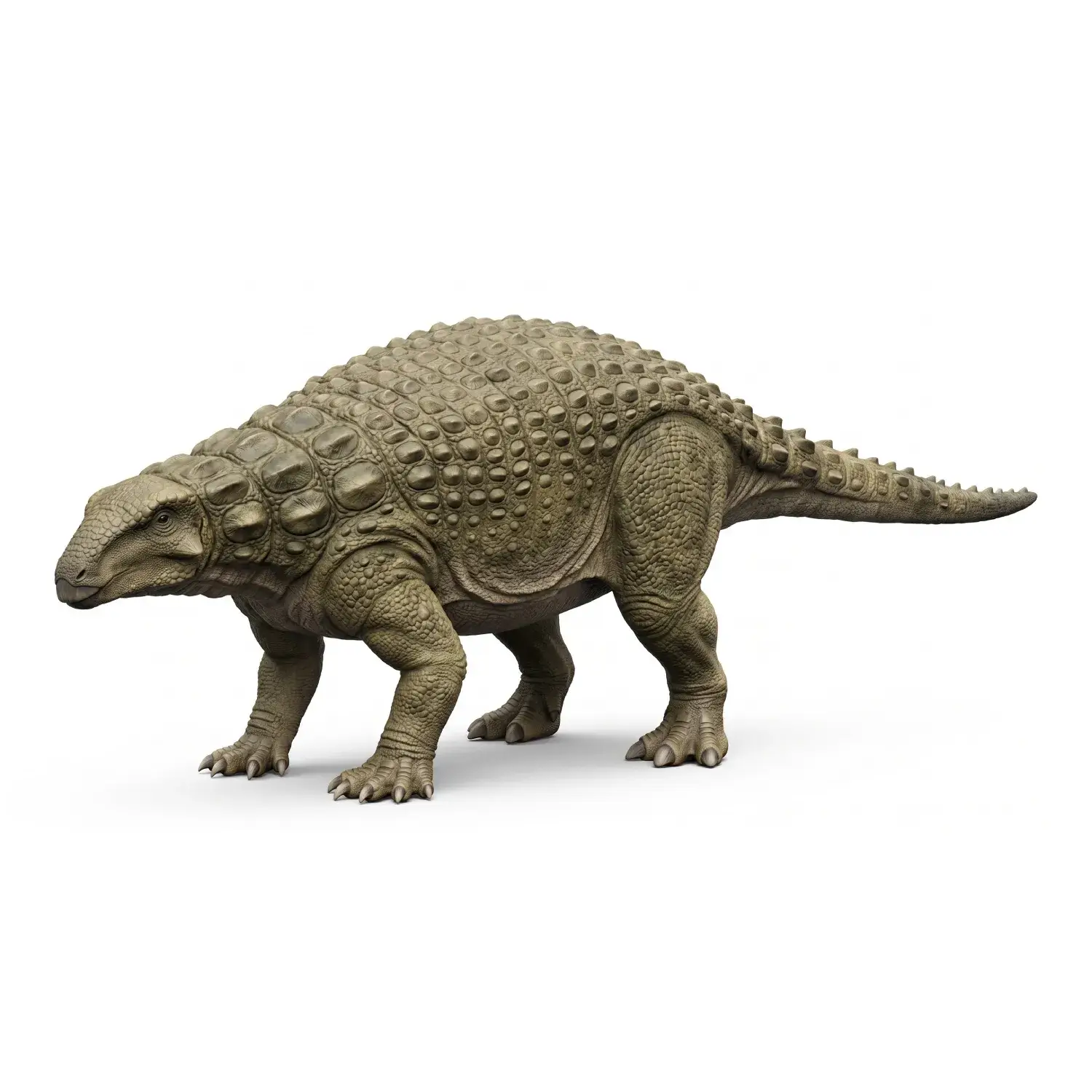
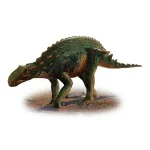
Nodosaurus was a medium-sized herbivorous dinosaur that lived in North America during the Late Cretaceous period.
The “nodo” in its name comes from the Latin word for knob (or “knobbed” in English), giving the entire genus name the meaning of “knobbed lizard.”
Despite being the representative species of the famous “Nodosauridae” family of armored dinosaurs, its true nature is actually shrouded in mystery.
A Defensive Strategy of “Endurance” Without Weapons
Armored dinosaurs are broadly divided into the “ankylosaurids,” which possess a club at the end of their tail, and the “nodosaurids,” which do not.
Nodosaurus, the representative of the latter, lacked the weapon of a tail club but instead specialized in defense using its heavy armor.
Rectangular Armor Lining Its Back
Small, rectangular armor plates were arranged in continuous rows across its back.
An Uncompromising Defensive Posture
It is believed that when attacked by a carnivorous dinosaur, it never fought back; instead, it would hunker down, exposing only its hard back, and survive this harsh era through a “test of endurance,” waiting for the opponent to give up and walk away.
The Presence of Spikes
While older reconstructions depicted it looking like an armadillo with only bony plates, recent studies suggest the possibility that, like its close relatives, it may have sported sharp spikes around its shoulders and neck.
Distinctive Facial Features and Limbs
Aside from its defensive armor, Nodosaurus possessed the following physical characteristics:
A Representative Species with Few Fossils? Its Mysterious Reality
The family “Nodosauridae” groups together famous armored dinosaurs such as Edmontonia and Sauropelta.
Despite Nodosaurus being its representative species (type species), its true nature remains shrouded in mystery.
The reason for this is that the only fossils discovered to date are “partial skeletons” found in Wyoming by Othniel Charles Marsh’s expedition in the 19th century.
Because a complete skeleton has not been found, much of its overall appearance relies on speculation based on its close relatives.
Attention! That “Mummy Fossil” is a Different Dinosaur
On the internet and in dinosaur encyclopedias, an incredibly well-preserved, magnificent fossil is sometimes introduced as the “Nodosaurus mummy fossil.”
However, that is actually a fossil of a close relative, “Borealopelta,” and not Nodosaurus itself.
Because they belong to the same Nodosauridae family, they are often confused, so caution is needed.
Lacking a tail club, Nodosaurus survived the Late Cretaceous period using the armor on its back and an uncompromising “hunkering down” defensive posture.
Although it is somewhat underappreciated—having few fossils despite being the representative of its group, and sometimes being mistaken for another species’ mummy fossil—it is, true to its name “knobbed lizard,” an essential and important dinosaur when discussing the evolution of armored dinosaurs.