Yunnanosaurus
Name Origin
Yunnan Lizard
Family
Yunnanosauridae
Classification
Diapsida, Saurischia, Sauropodomorpha
Habitat (Discovery Location)
China
Period
Early to Middle Jurassic
Length
Approximately 3 - 13 meters
Diet
Herbivore (Plant-eater)
TODAY'S QUIZ
Correct answer = 1 coin
What unusual feature did Yunnanosaurus have in its teeth, which was rarely seen in other early sauropodomorphs?
Loading…
You might also like... 

-
 Thescelosaurus
- Classification
- Ornithischia
- Characteristics
- Herbivorous
- Era
- Cretaceous period
- Lesothosaurus
- Classification
- Ornithischia
- Characteristics
- Herbivorous
- Era
- Jurassic period
- Frenguellisaurus
- Classification
- Theropods
- Characteristics
- Carnivorous
- Era
- Triassic period
- Elaphrosaurus
- Classification
- Theropods
- Characteristics
- Carnivorous
- Era
- Jurassic period
-
Sponsored Links
-
Sponsored Links










Description
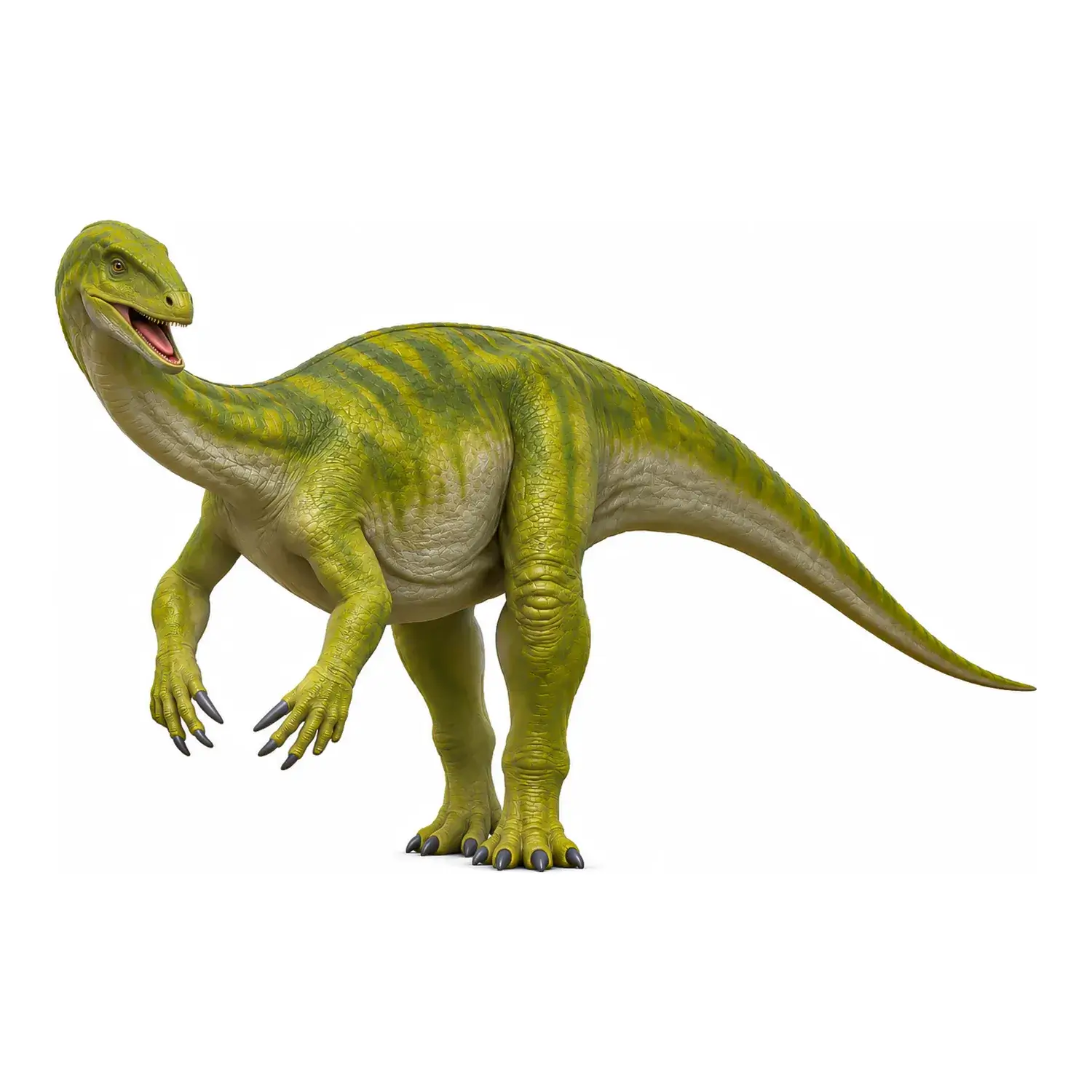
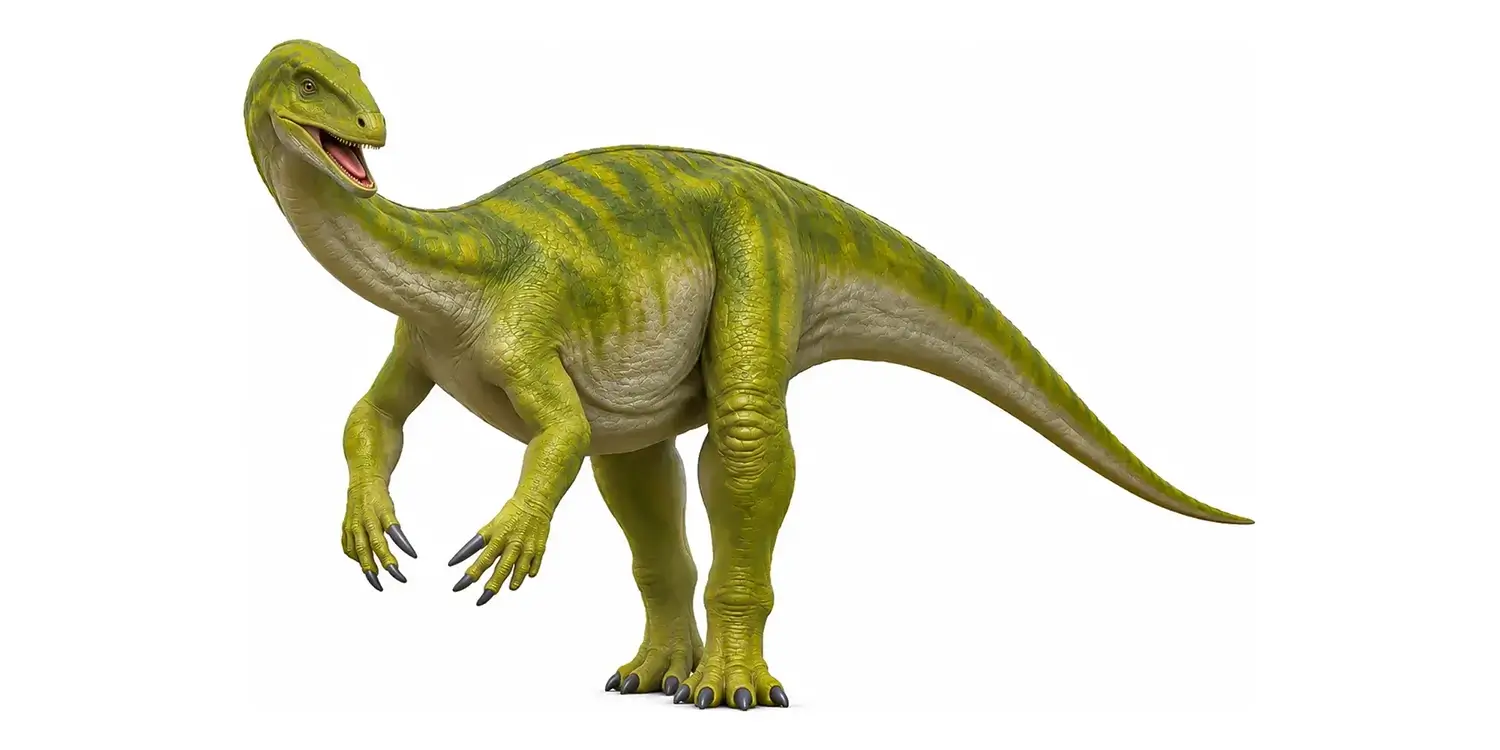
Yunnanosaurus was a herbivorous dinosaur that lived in what is now China during the Early to Middle Jurassic.
Although it belonged to the prosauropods, a group that retained many primitive features, it also possessed characteristics similar to those of the large sauropodomorphs that appeared later.
One of its most remarkable features was its set of more than 60 spoon-shaped teeth lining its jaws.
These teeth had an unusual structure in which the upper and lower teeth rubbed against each other during feeding, naturally polishing their surfaces.
Body size varied considerably between species. The smaller Yunnanosaurus huangi is estimated to have reached approximately 3 – 7 meters in length, while the larger Yunnanosaurus youngi is believed to have reached approximately 13 meters.
Yunnanosaurus: Discovered in Yunnan Province
Yunnanosaurus fossils were discovered in the Lufeng Formation in Yunnan Province, China.
The scientific name “Yunnanosaurus” comes from Yunnan Province, where the fossils were discovered, and means “Yunnan Lizard.”
In 1942, Chinese paleontologist Yang Zhongjian formally described the type species, Yunnanosaurus huangi (Y. huangi).
Subsequent research has identified more than 20 incomplete skeletons and two skulls.
In 2007, another species, Yunnanosaurus youngi (Y. youngi), was described.
Yunnanosaurus youngi was considerably larger than Yunnanosaurus huangi and is estimated to have reached approximately 13 meters in length.
Unique Features of Its More Than 60 Teeth
One of the defining characteristics of Yunnanosaurus was its set of more than 60 spoon-shaped teeth arranged along its jaws.
Their shape closely resembled the teeth of sauropodomorphs that appeared in later periods.
Another distinctive feature was that its teeth were naturally polished as the upper and lower teeth rubbed against each other during feeding.
This mechanism is thought to have helped maintain their surfaces in a condition suitable for eating plants.
This type of self-sharpening tooth structure was unusual among other prosauropods.
However, the similarity between its teeth and those of sauropodomorphs does not mean that Yunnanosaurus was a direct ancestor of the large sauropodomorphs.
Its postcranial skeleton retained characteristics of prosauropods, and the similarities in tooth structure are considered an example of convergent evolution, in which different groups independently develop similar features as they adapt to comparable environments.
Differences in Body Size Between Species
Yunnanosaurus is known for including species that grew to considerable sizes, despite being a relatively primitive sauropodomorph.
The type species, Yunnanosaurus huangi, is estimated to have reached approximately 3 – 7 meters in length, whereas Yunnanosaurus youngi is believed to have reached approximately 13 meters.
Even within the same genus, body size varied significantly between species.
This increase in body size is also an interesting feature when considering the evolution of prosauropods.
However, Yunnanosaurus was not a direct ancestor of giant sauropodomorphs such as Brachiosaurus and Apatosaurus. Instead, these groups are thought to have followed separate evolutionary paths.