
Chuanqilong
Name Origin
Legendary Dragon
Classification
Reptilia, Ornithischia, Thyreophora
Habitat (Discovery Location)
China
Period
Approximately 124 - 119 million years ago (Early Cretaceous)
Length
Approximately 4.5 meters
Weight
Approximately 450 kilograms
Diet
Herbivore (Plant-eater)
TODAY'S QUIZ
Correct answer = 1 coin
At a 2019 conference, what possibility was proposed regarding the Chuanqilong fossil and Liaoningosaurus?
Loading…
You might also like... 

-
 Alectrosaurus
- Classification
- Theropods
- Characteristics
- Carnivorous
- Era
- Cretaceous period
- Suchomimus
- Classification
- Theropods
- Characteristics
- Carnivorous
- Era
- Cretaceous period
- Qianzhousaurus
- Classification
- Theropods
- Characteristics
- Carnivorous
- Era
- Cretaceous period
- Gigantoraptor
- Classification
- Theropods
- Characteristics
- Omnivorous
- Era
- Cretaceous period
-
Sponsored Links
-
Sponsored Links

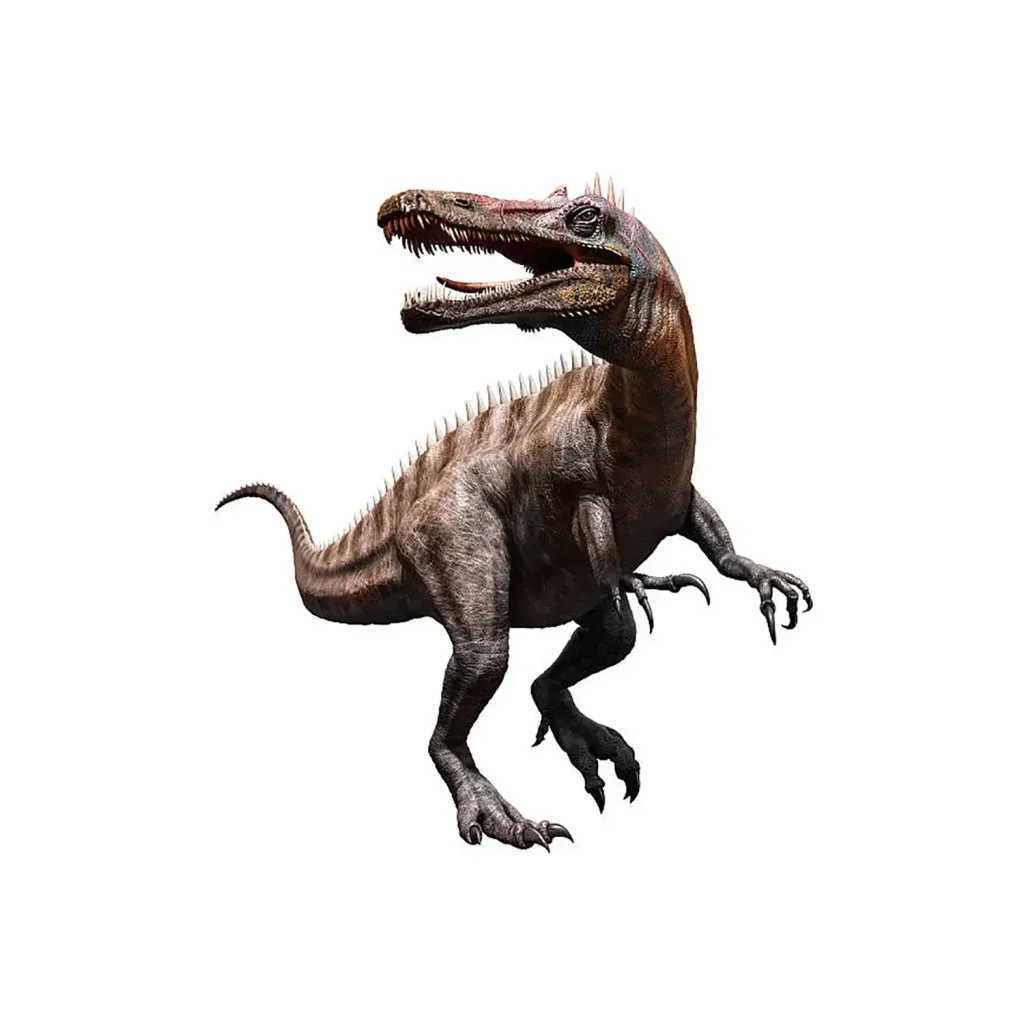















Description
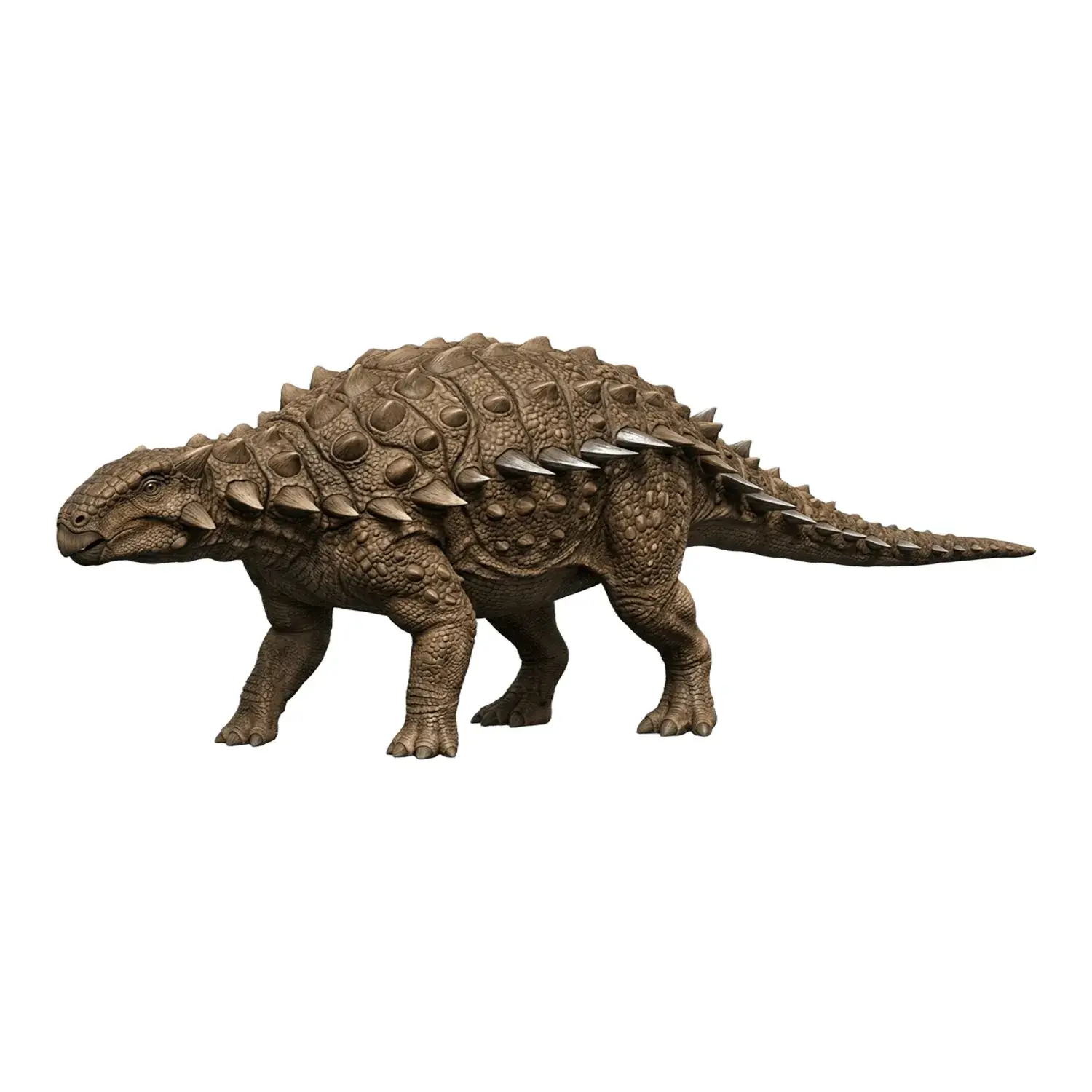
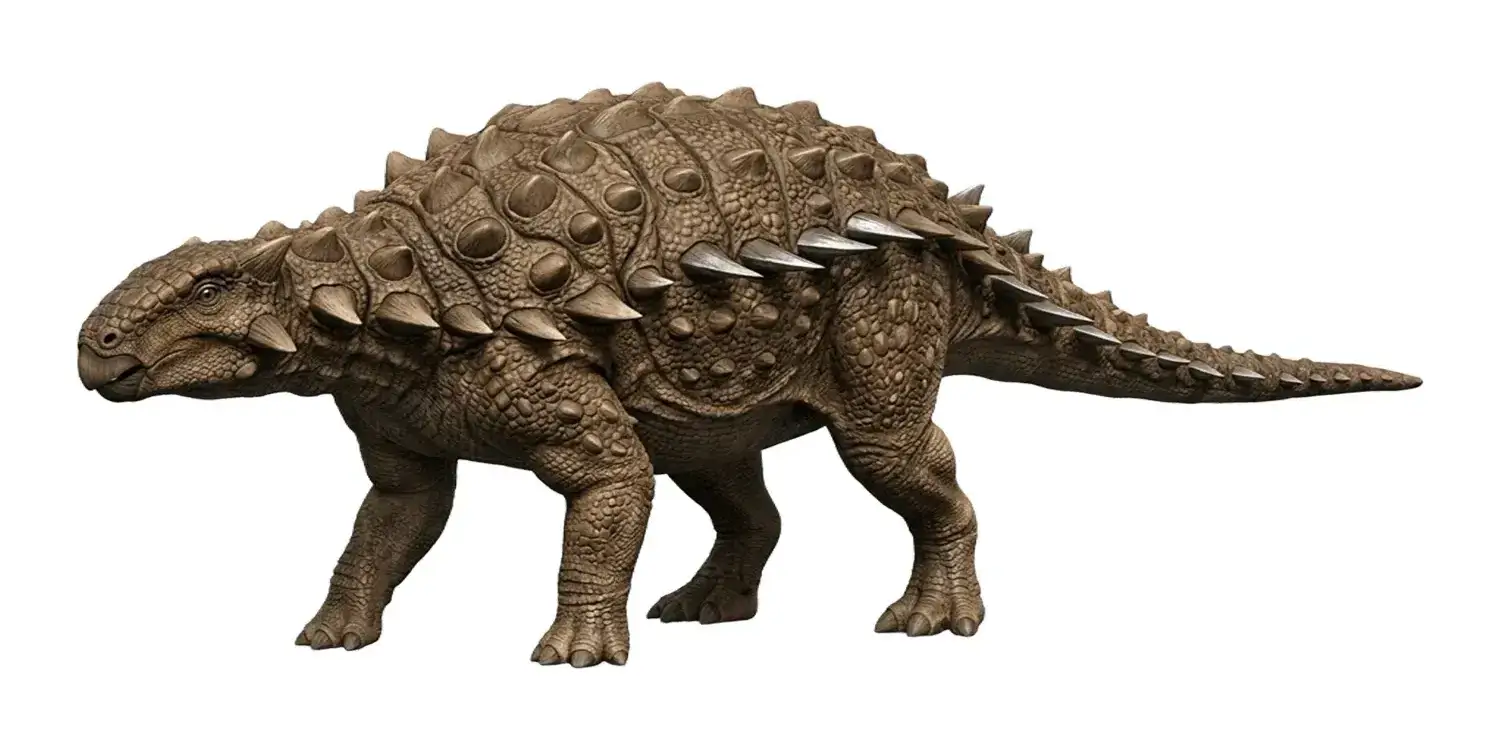
Chuanqilong was an armored dinosaur that lived in what is now Liaoning Province, China, during the Early Cretaceous.
It belonged to the ankylosaur group, but unlike later members such as Ankylosaurus, it is thought to have lacked a large, hammer-shaped bony structure known as a tail club at the tip of its tail.
It is estimated to have reached approximately 4.5 meters in length and walked on four legs that supported its body.
Fossils preserving the skull, limbs, vertebrae, and bony armor covering its body have been discovered, making it an important dinosaur for understanding the anatomy of Early Cretaceous ankylosaurs.
What Was Chuanqilong? An Armored Dinosaur Without a Tail Club
Chuanqilong was a quadrupedal dinosaur whose body was covered with bony armor.
In terms of classification, it is placed among the relatively early-branching, or basal, members of the ankylosaurs.
Later ankylosaurs such as Ankylosaurus had a large bony mass called a tail club at the tip of their tails.
However, Chuanqilong shows no evidence of the specialized bones needed to support a tail club, suggesting that it lacked a large, hammer-shaped structure at the end of its tail.
Another important feature is that its fossils preserve almost the entire skeleton, from the skull and limbs to the vertebrae and armor.
This specimen provides valuable information for studying the body structure of armored dinosaurs during the Early Cretaceous.
The Scientific Name Chuanqilong Means “Legendary Dragon”
The genus name “Chuanqilong” combines the Chinese words “Chuanqi,” meaning “legendary,” and “long,” meaning “dragon.” Together, the name means “Legendary Dragon.”
It also reflects the region in western Liaoning Province, China, where numerous fossils have been discovered.
The species name “chaoyangensis” is derived from Chaoyang, the region where the fossils were discovered.
Both the genus name and the species name reflect geographical features associated with the fossil discovery site.
The Discovery and Fossils of Chuanqilong
Discovered in the Jiufotang Formation in Liaoning Province
Chuanqilong fossils were discovered in the Jiufotang Formation in Liaoning Province, China.
The Jiufotang Formation is well known for producing numerous fossils of feathered dinosaurs and early birds.
The discovery of Chuanqilong revealed that armored dinosaurs also inhabited this region.
Among the many dinosaur and bird fossils found in the Jiufotang Formation, Chuanqilong provides another important clue to the diversity of dinosaurs that lived there.
A Valuable Specimen Preserving Almost the Entire Skeleton
The fossil is believed to have been collected from a single location by a local farmer.
With the exception of the tip of the tail, almost the entire skeleton, including the skull, vertebrae, and limbs, was preserved together.
Several pieces of the bony armor that covered its body were also preserved.
However, the fossil was preserved in a flattened, compressed state, with mainly the underside of the body visible.
The skull was compressed vertically, and many of the vertebrae had shifted from their original positions.
As a result, there are limitations to reconstructing the three-dimensional shapes of the bones and their exact anatomical positions.
On the other hand, some of the limb bones were preserved with their original relative positions intact.
This made it possible to examine the structure of the forelimbs and hindlimbs in detail and compare them with those of other ankylosaurs.
Described as a New Genus and Species in 2014
In 2014, a research team consisting of Han Fenglu, Zheng Wenjie, Hu Dongyu, Xu Xing, Paul M. Barrett, and others formally described Chuanqilong as a new genus and species.
The researchers closely examined the fossil skeleton, identified features that distinguished it from other dinosaurs, and assigned it a new scientific name.
Only one species is currently recognized: Chuanqilong chaoyangensis.
Life in Early Cretaceous China
Chuanqilong is thought to have lived during the Barremian to Aptian stages of the Early Cretaceous.
Although the exact dates vary depending on the source, its existence is generally placed within a range of approximately 124 – 119 million years ago.
At that time, the area surrounding the Jiufotang Formation is believed to have been a temperate forest with scattered lakes.
Birds, pterosaurs, and various dinosaurs inhabited this environment, and Chuanqilong was part of this ecosystem.
Chuanqilong was a herbivore and is thought to have fed on ferns, cycads, and other plants while moving through areas with dense undergrowth.
However, no direct evidence of the plants it ate, such as preserved stomach contents, has been identified.
Therefore, its specific diet has been inferred from its habitat and other environmental evidence.
Chuanqilong’s Size and Body Structure
Approximately 4.5 Meters Long and Weighing Approximately 450 Kilograms
Chuanqilong is estimated to have measured approximately 4.5 meters in length and weighed approximately 450 kilograms.
It had a sturdy build, with its body held relatively close to the ground.
However, its weight is an estimate, and figures vary between sources.
It has also been suggested that the discovered specimen may have been an individual that had not yet finished growing. Therefore, whether the estimated size accurately represents a fully grown adult remains a matter of debate.
Debate Continues Over Whether the Specimen Was Juvenile or Adult
When Chuanqilong was first described in 2014, the discovered specimen was considered to be a young individual.
For this reason, its estimated length of approximately 4.5 meters was thought to represent its size before reaching maturity, and it was suggested that fully grown individuals may have been even larger.
However, a conference presentation in 2019 suggested that the specimen might actually have been an adult.
It was also proposed that it could represent a different growth stage of Liaoningosaurus.
As a result, researchers continue to disagree over whether the Chuanqilong specimen was juvenile or adult.
Its fully grown size also remains uncertain.
Features of Chuanqilong’s Skull and Teeth
The upper jawbone contained at least 20 alveoli (sockets where teeth are positioned), while at least 20 alveoli were also identified in the dentary bones of the lower jaw.
The tooth row in the lower jaw was relatively straight and did not have the pronounced wave-like shape seen in more derived ankylosaurs that appeared later.
These dental and jaw characteristics provide useful clues for distinguishing Chuanqilong from other ankylosaurs.
No Hammer-Shaped Tail Club at the Tip of Its Tail
A tail club, as seen in Ankylosaurus and other related dinosaurs, is a large mass of bone at the tip of the tail.
It is thought to have been used as a weapon to strike enemies. In species with tail clubs, the bones at the end of the tail are specially modified to support this structure.
However, no specialized tail vertebrae needed to support a tail club have been identified in Chuanqilong.
For this reason, it is thought to have lacked a large, hammer-shaped bony mass at the tip of its tail.
Chuanqilong’s Classification and Close Relatives
A Dinosaur Closely Related to Liaoningosaurus
A 2014 study concluded that Chuanqilong was closely related to Liaoningosaurus, another dinosaur discovered in the same general region of Liaoning Province, and that the two formed sister groups on the evolutionary tree.
The two dinosaurs were found to share features of the skull and shoulder bones, while differing in body size, tooth count, and the proportions of their limb bones.
Based on these anatomical differences, they were initially classified as separate genera.
Its Evolutionary Position Varies Between Studies
Different studies have produced different results regarding the precise position of Chuanqilong within the ankylosaurs.
Some analyses suggest that it was closely related to Cedarpelta from North America, while others place it in a polytomy alongside other basal ankylosaurs.
Furthermore, a 2022 study placed Chuanqilong within a group that also includes Liaoningosaurus and Cedarpelta.
This group is considered to lie outside both Ankylosauridae and Nodosauridae.
As a result, it has not yet been established whether Chuanqilong belonged within Ankylosauridae or occupied a more basal position outside the family.
Were Chuanqilong and Liaoningosaurus the Same Dinosaur?
One of the major questions in research on Chuanqilong is whether it may actually have been the same species as Liaoningosaurus.
As dinosaurs grow, the shapes and proportions of their bones can change.
For this reason, juvenile and adult individuals of the same species may sometimes appear to be different kinds of dinosaurs.
In the case of Chuanqilong and Liaoningosaurus, researchers are investigating whether the differences in specimen size and skeletal structure indicate separate species or simply reflect different stages of growth.
A conference presentation in 2019 proposed that the Chuanqilong specimen was an adult and might represent a fully grown individual of Liaoningosaurus.
However, it has not been conclusively established that the two dinosaurs were the same species.
Future discoveries of fossils representing different growth stages, along with detailed comparisons of their skulls, teeth, and limb bones, may help clarify the relationship between these two dinosaurs.