
Cedarosaurus
Name Origin
Cedar Mountain Formation Lizard
Family
Brachiosauridae
Classification
Diapsida, Saurischia, Sauropodomorpha
Habitat (Discovery Location)
United States
Period
Early Cretaceous
Length
Approximately 14 meters
Diet
Herbivore (Plant-eater)
TODAY'S QUIZ
Correct answer = 1 coin
What evidence led researchers to conclude that the 115 stones found with Cedarosaurus were gastroliths swallowed during its lifetime?
Loading…
You might also like... 

-
 Maraapunisaurus
- Classification
- Sauropods
- Characteristics
- Herbivorous
- Era
- Jurassic period
- Torosaurus
- Classification
- Marginocephalia
- Characteristics
- Herbivorous
- Era
- Cretaceous period
- Saltasaurus
- Classification
- Sauropods
- Characteristics
- Herbivorous
- Era
- Cretaceous period
- Proceratosaurus
- Classification
- Theropods
- Characteristics
- Carnivorous
- Era
- Jurassic period
-
Sponsored Links
-
Sponsored Links

















Description
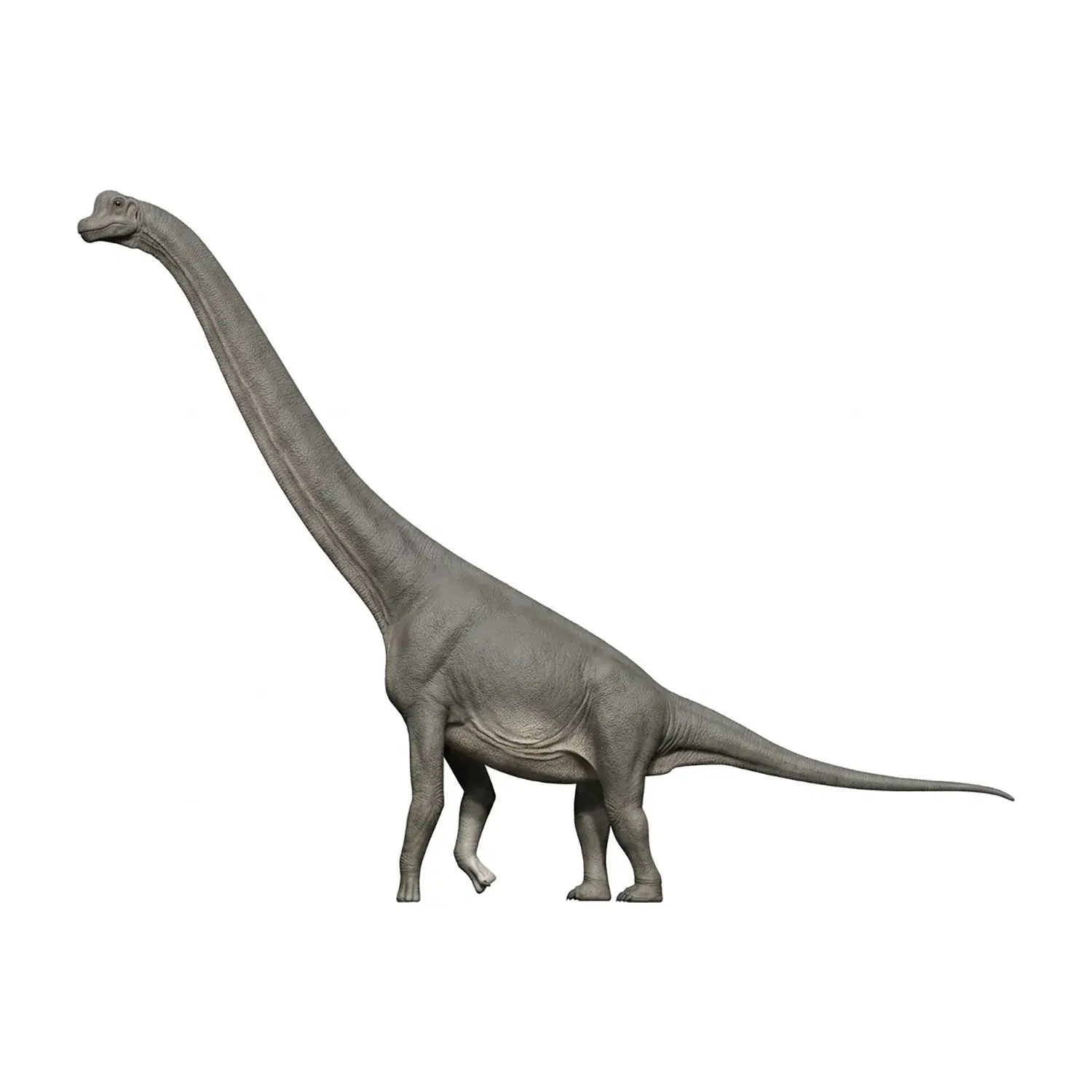
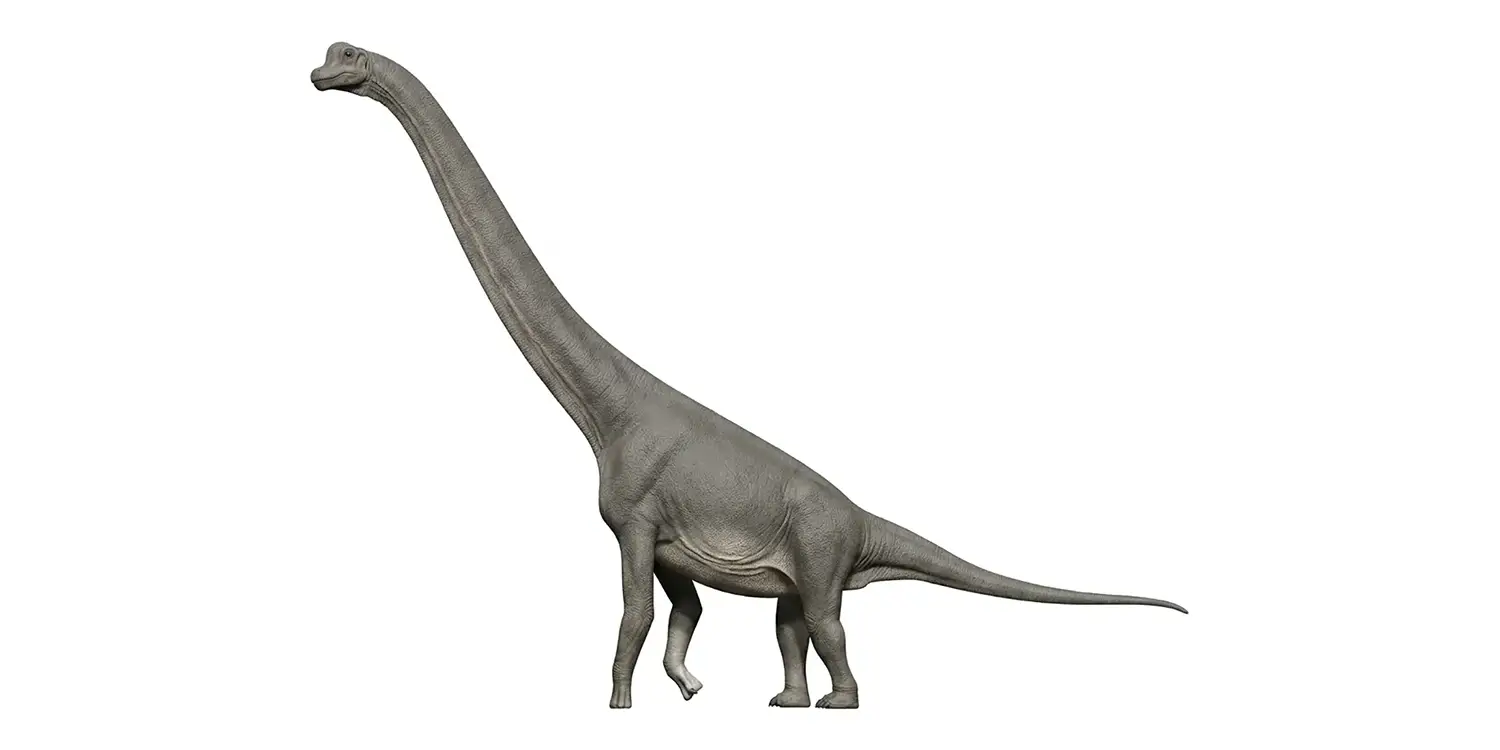
Cedarosaurus was a herbivorous dinosaur that lived in North America during the Early Cretaceous.
It was a sauropodomorph belonging to the same family as Brachiosaurus, Brachiosauridae, and is estimated to have reached approximately 14 meters in length.
Although relatively small for a member of Brachiosauridae, it had long forelimbs and a robust body, displaying the characteristic features of large, long-necked herbivorous dinosaurs.
Cedarosaurus is also notable for the discovery of as many as 115 stones alongside its skeleton.
These stones are thought to have been gastroliths, or stomach stones, and provide valuable clues about dinosaur diets and digestive systems.
Fossils Discovered in Utah and the Origin of Its Name
Cedarosaurus fossils were discovered in the Cedar Mountain Formation in the state of Utah, United States.
Its scientific name is “Cedarosaurus weiskopfae.”
The genus name comes from the Cedar Mountain Formation, where the fossils were discovered, and means “Cedar Mountain Formation Lizard.”
It was formally described in 1999 by Virginia Tidwell, Kenneth Carpenter, William Brooks, and others.
It lived during the Barremian age of the Early Cretaceous and is thought to have been closely related to dinosaurs such as Brachiosaurus and Eucamerotus.
Fossils of other dinosaurs have also been discovered in the Cedar Mountain Formation, including the carnivorous Utahraptor and the armored herbivore Gastonia.
Cedarosaurus lived in an environment inhabited by this diverse range of dinosaurs.
Physical Features: Long Forelimbs and a Short Tail
Cedarosaurus is estimated to have reached approximately 14 meters in length.
Although relatively small for a brachiosaurid, it was still a large dinosaur compared with many other dinosaurs.
One of its physical characteristics was that its forelimbs were longer than its hind limbs.
Its humerus and femur were nearly equal in length, giving it the typical brachiosaurid body shape, with the forelimbs supporting the front of the body.
In contrast, its tail is believed to have been considerably shorter than those of other sauropodomorphs.
Despite having a long neck and robust limbs, it had a distinctive tail structure.
Compared with its close relative Venenosaurus, Cedarosaurus had thinner radii and ulnae, the bones of the forearm, as well as relatively slender metatarsals.
Its vertebrae also had distinctive features. The projections on the vertebrae near the middle of the tail were angled forward.
Similar structures have also been observed in some other sauropodomorphs.
115 Gastroliths Discovered Alongside Its Fossils
One reason Cedarosaurus has attracted the attention of paleontologists is the large number of gastroliths discovered alongside its skeleton.
Gastroliths are stones swallowed by animals.
They are thought to have been used primarily to aid digestion.
In 2001, a detailed study was published on the 115 stones discovered alongside the Cedarosaurus skeleton.
Rather than being scattered randomly around the fossils, these stones had been preserved together in a concentrated cluster.
Based on their clustered arrangement, the surrounding geological layers, and their position relative to the fossils, researchers concluded that these were gastroliths swallowed by the animal during its lifetime.
The 115 gastroliths had a combined weight of approximately 7 kilograms and a total volume of approximately 2,703 cubic centimeters.
They varied in size, ranging from small stones to specimens weighing more than 700 grams.
They were also made from several different types of rock.
The collection included chert, sandstone, siltstone, quartzite, and other materials.
Did Gastroliths Help Digest Plants?
Large herbivorous dinosaurs such as Cedarosaurus consumed enormous quantities of plants.
However, plants contain large amounts of fibrous material that can be difficult to digest.
It is possible that swallowed gastroliths moved around inside the digestive tract, helping to grind up plant material and mix its contents, thereby aiding digestion.
Some of the discovered gastroliths had rough, uneven surfaces.
It has been suggested that these shapes may have been suited to grinding plant material.
However, there is no confirmed evidence that Cedarosaurus had a highly developed muscular organ similar to the gizzard found in modern birds.
For this reason, the extent to which gastroliths helped break down plant material should be considered carefully.
Geological survey materials from Utah also indicate that the quantity of gastroliths discovered was insufficient to fill a large gizzard appropriate for an animal of its body size.
This has led to the suggestion that the stones may instead have helped mix plant material in the stomach and aid digestion.
The preservation of not only the dinosaur’s skeleton but also stones thought to have been inside its stomach is an extremely valuable discovery for understanding its diet and feeding habits.