
Lesothosaurus

Name Origin
Lizard from Lesotho
Family
Lesothosauridae
Classification
Diapsida, Ornithischia
Habitat (Discovery Location)
South Africa
Period
Approximately 199 - 189 million years ago (Early Jurassic)
Length
Approximately 1 meter
Weight
Approximately 3 - 10 kilograms
Diet
Herbivore (Plant-eater)
 Jurassic
Park / World Featured Dinosaur
Appearance in Jurassic World
It does not appear as a living creature in the film.
However, its existence seems to be confirmed by its inclusion in the lineup of the Holoscope (hologram display) located within the park's Innovation Center.
It is unknown if a living specimen was ever on the island, as it is not counted as one of the dinosaurs officially housed at the park. Therefore, it is possible that although its genetic data existed, it was never actually restored (cloned), or perhaps it had existed at some point in the past.
TODAY'S QUIZ
Correct answer = 1 coin
In 2005, paleontologist Richard Butler proposed that Lesothosaurus might be closely related to which dinosaur group?
Loading…
You might also like... 

-
 Fukuiraptor
- Classification
- Theropods
- Characteristics
- Carnivorous
- Era
- Cretaceous period
- Herrerasaurus
- Classification
- Saurischia
- Characteristics
- Carnivorous
- Era
- Triassic period
- Argentinosaurus
- Classification
- Sauropods
- Characteristics
- Herbivorous
- Era
- Cretaceous period
- Conchoraptor
- Classification
- Theropods
- Characteristics
- Omnivorous
- Feathered
- Era
- Cretaceous period
-
Sponsored Links
-
Sponsored Links















Description
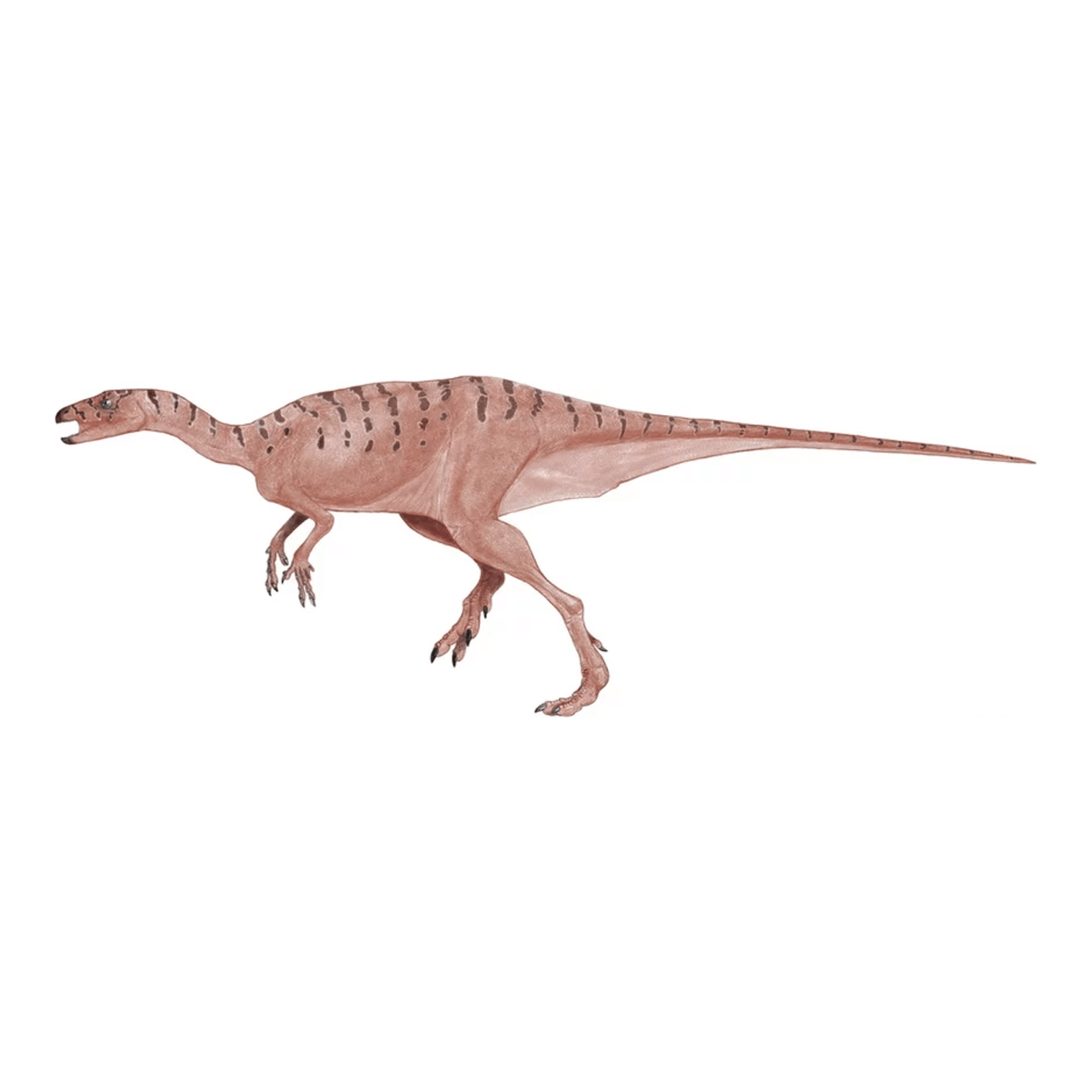
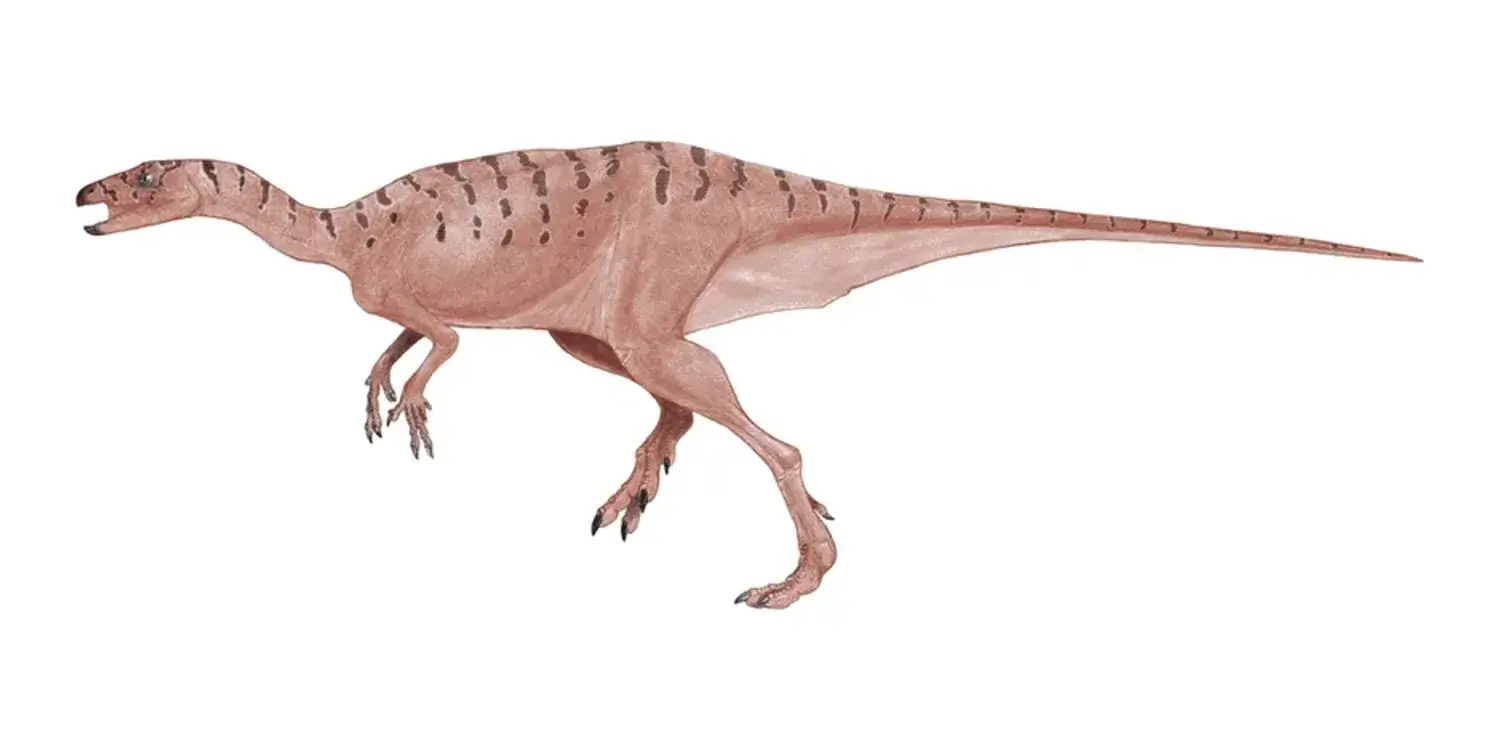
Lesothosaurus was a small herbivorous dinosaur that lived in what is now southern Africa during the Early Jurassic.
It measured approximately 1 meter in length and had a slender body and long legs, suggesting that it was capable of running quickly.
In dinosaur classification, it is considered a very primitive member of the Ornithischia, the group that also includes ceratopsians, stegosaurs, and ankylosaurs.
It has been suggested that it was closely related to the Thyreophora, the group that includes Stegosaurus and Ankylosaurus. It is therefore regarded as an important dinosaur for understanding the evolution of ornithischians.
Fossils Discovered in Lesotho and the Origin of Its Name
Lesothosaurus fossils have been discovered in what is now the Kingdom of Lesotho and surrounding areas of South Africa.
In 1978, it was formally described by paleontologist Peter Galton.
The scientific name “Lesothosaurus” was derived from Lesotho, where its fossils were discovered, and means “Lesotho Lizard.”
Lesothosaurus lived approximately 190 million years ago, during the Early Jurassic.
At that time, dinosaurs were still evolving into a wide variety of body shapes and dietary habits.
Lesothosaurus is one of the dinosaurs that retains many of the characteristic features of early ornithischians.
Running Quickly with Its Long Hindlimbs
Lesothosaurus was a small dinosaur measuring approximately 1 meter in length and is thought to have been relatively lightweight.
It had a slender body, and the bones of its hindlimbs were long and thin.
These features suggest that it was adapted for running quickly on its two hind legs.
Its head had relatively large eyes, which may have allowed it to observe a wide area of its surroundings.
When predators such as carnivorous dinosaurs approached, it is thought to have detected the danger quickly and fled.
Its forelimbs also had fingers, which may have been used for grasping objects rather than primarily for walking.
A Beak-Like Snout and Primitive Teeth
As a herbivorous dinosaur, Lesothosaurus had a relatively simple facial structure resembling that of modern lizards.
It is thought to have lacked the well-developed cheek structures seen in herbivorous dinosaurs that appeared in later periods.
The tip of its snout had a toothless, beak-like structure that was used to bite off plant material.
Its teeth were small, with peg-like teeth at the front of the jaws and leaf-shaped teeth toward the back.
Unlike the herbivorous dinosaurs of later periods, its teeth were not specialized for efficiently grinding plant material.
Furthermore, based on the wear patterns on its teeth, some researchers have suggested that although it primarily ate plants, it may also have been an omnivore that occasionally consumed small animals.
Classification Debates Concerning Its Relationship with Thyreophorans
When Lesothosaurus was first discovered, it was classified as a dinosaur closely related to ornithopods such as Hypsilophodon, or as a primitive ornithischian.
However, subsequent research has led to a reassessment of its evolutionary position.
In 2005, paleontologist Richard Butler proposed that Lesothosaurus may have been an early-branching member of the Thyreophora.
Thyreophorans are a group that includes stegosaurs such as Stegosaurus and ankylosaurs such as Ankylosaurus.
However, researchers have different opinions about the precise evolutionary position of Lesothosaurus, and debate continues over which group within Ornithischia it was most closely related to.
For this reason, it cannot be definitively identified as a direct ancestor of Stegosaurus or Ankylosaurus.
Nevertheless, it is considered an important dinosaur for understanding the early evolution of thyreophorans.