
Gasosaurus
Name Origin
Gasoline Lizard
Classification
Diapsida, Saurischia, Theropoda
Habitat (Discovery Location)
China
Period
Middle Jurassic
Length
Approximately 3.5 meters
Weight
Approximately 150 kilograms
Diet
Carnivore (Meat-eater)
You might also like... 

-
 Corythoraptor
- Classification
- Theropods
- Characteristics
- Herbivorous
- Omnivorous
- Era
- Cretaceous period
- Deinocheirus
- Classification
- Theropods
- Characteristics
- Omnivorous
- Feathered
- Era
- Cretaceous period
- Eoraptor
- Classification
- Sauropods
- Characteristics
- Omnivorous
- Era
- Triassic period
- Torosaurus
- Classification
- Marginocephalia
- Characteristics
- Herbivorous
- Era
- Cretaceous period
-
Sponsored Links
-
Sponsored Links











![[Latest Research] What Was the Function of Spinosaurus's Giant "Sail"? Exploring the Mysteries of Thermoregulation and Underwater Locomotion](https://dinosaurmuseum.jp/wp/wp-content/uploads/eyecatch_spinosaurus-sail-function_en-1024x512.webp)
![[Latest Discovery] A Third Type of Skin, Neither Scales Nor Feathers? Meet "Haolong dongi," a New Dinosaur Species Covered Entirely in Spikes](https://dinosaurmuseum.jp/wp/wp-content/uploads/eyecatch_dinosaur-spiky-skin-discovery_en-1024x512.webp)




Description
Dinosaur names come from various sources, but some bear unique names associated with “modern infrastructure projects.”
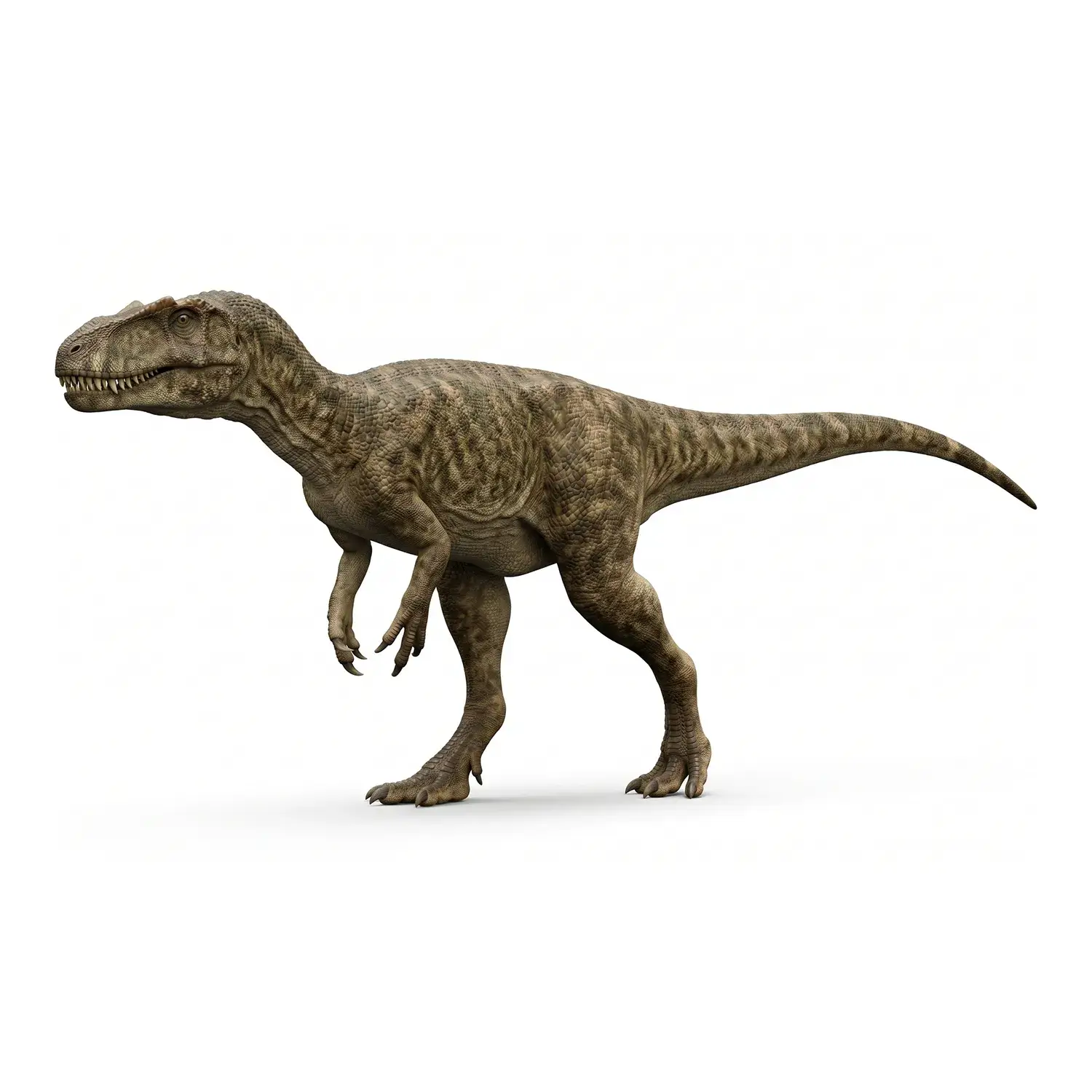
This is “Gasosaurus,” a carnivorous dinosaur that lived in mainland China during the Middle Jurassic period.
Despite being a medium-sized dinosaur with a total length of about 3.5 meters, it possessed a sturdy physique. Hidden within its fossils is a mysterious episode where the modern energy industry and ancient life intersect.
Gas Company Contributed to Discovery! Unique Scientific Name “Gasoline Lizard”
The scientific name Gasosaurus literally translates to “Gas Lizard” or “Gasoline Lizard.”
While it sounds like a kaiju from a sci-fi movie or a joke, this is a genuine, academically recognized formal name.
Discovery in 1985 and Reason for Naming
Why was it given such a name?
Let’s turn the clock back to 1985 in China.
At the time, construction work for a gas facility was underway at a certain site.
During the excavation work, workers accidentally discovered dinosaur fossils in the ground.
The on-site gas company contributed significantly to this excavation work.
In honor of their contribution, the discovered dinosaur was gifted the name “Gasosaurus,” bearing the name “Gas.”
It can be called a discovery story unique to modern times, where the modern energy industry and ancient life were miraculously linked.
“Sturdy” Physique and Sharp Teeth Despite its Size
Fossils of Gasosaurus have not been found in a complete state; currently, it is known mainly from parts of the lower body and partial limbs and hip bones.
However, we can infer its appearance in life from these limited parts.
A Predator Combining Agility and Power
What is noteworthy is the sturdiness of its skeletal frame.
Its total length was about 3.5 meters, which is small compared to later giant carnivorous dinosaurs. However, analysis of the remaining bone structure reveals that it had a very “sturdy” skeleton for its size.
From this feature, it is inferred that Gasosaurus was a powerful predator possessing not only agility but also the power to bite into prey.
Also, the discovered teeth had the sharp “serrations” characteristic of carnivorous dinosaurs and closely resembled those of Megalosaurus discovered in the UK.
It likely brought down Middle Jurassic prey with these sharp teeth and sturdy jaws.
Ancestor of Tyrannosaurus? “Tetanurae” Unraveling Evolution
Gasosaurus is also an intriguing entity regarding its taxonomic position.
Initially, due to the primitive structure of its lower body and the characteristics of its teeth, it was thought to be a species of Megalosaurus.
“Distant Ancestor” of Giant Star Dinosaurs
However, with the progress of research, it is now placed in a more important position.
Gasosaurus belongs to the “Tetanurae,” a group that includes many carnivorous dinosaurs that would later dominate the dinosaur era, such as Allosaurus and Tyrannosaurus. It is considered “one of the most primitive species” within this group.
This means that Gasosaurus is a “distant ancestor” of the star dinosaurs that would reign in later eras, or an existence close to the starting point of their evolution.
This dinosaur, which appeared by chance from a construction site, continues to fuel research into the evolution of carnivorous dinosaurs, much like fossil fuel itself.