
Alxasaurus
Name Origin
Alxa Lizard
Family
Alxasauridae
Classification
Diapsida, Saurischia, Theropoda
Habitat (Discovery Location)
China
Period
Early Cretaceous
Length
Approximately 3.5 - 4 meters
Diet
Herbivore (Plant-eater)
TODAY'S QUIZ
Correct answer = 1 coin
What important discovery about therizinosaurs was supported by the study of Alxasaurus fossils?
Loading…
You might also like... 

-
 Carnotaurus
- Classification
- Theropods
- Characteristics
- Carnivorous
- Era
- Cretaceous period
- Camptosaurus
- Classification
- Ornithopoda
- Characteristics
- Herbivorous
- Era
- Jurassic period
- Cretaceous period
- Caihong
- Classification
- Theropods
- Characteristics
- Carnivorous
- Feathered
- Era
- Jurassic period
- Teratophoneus
- Classification
- Theropods
- Characteristics
- Carnivorous
- Era
- Cretaceous period
-
Sponsored Links
-
Sponsored Links














Description
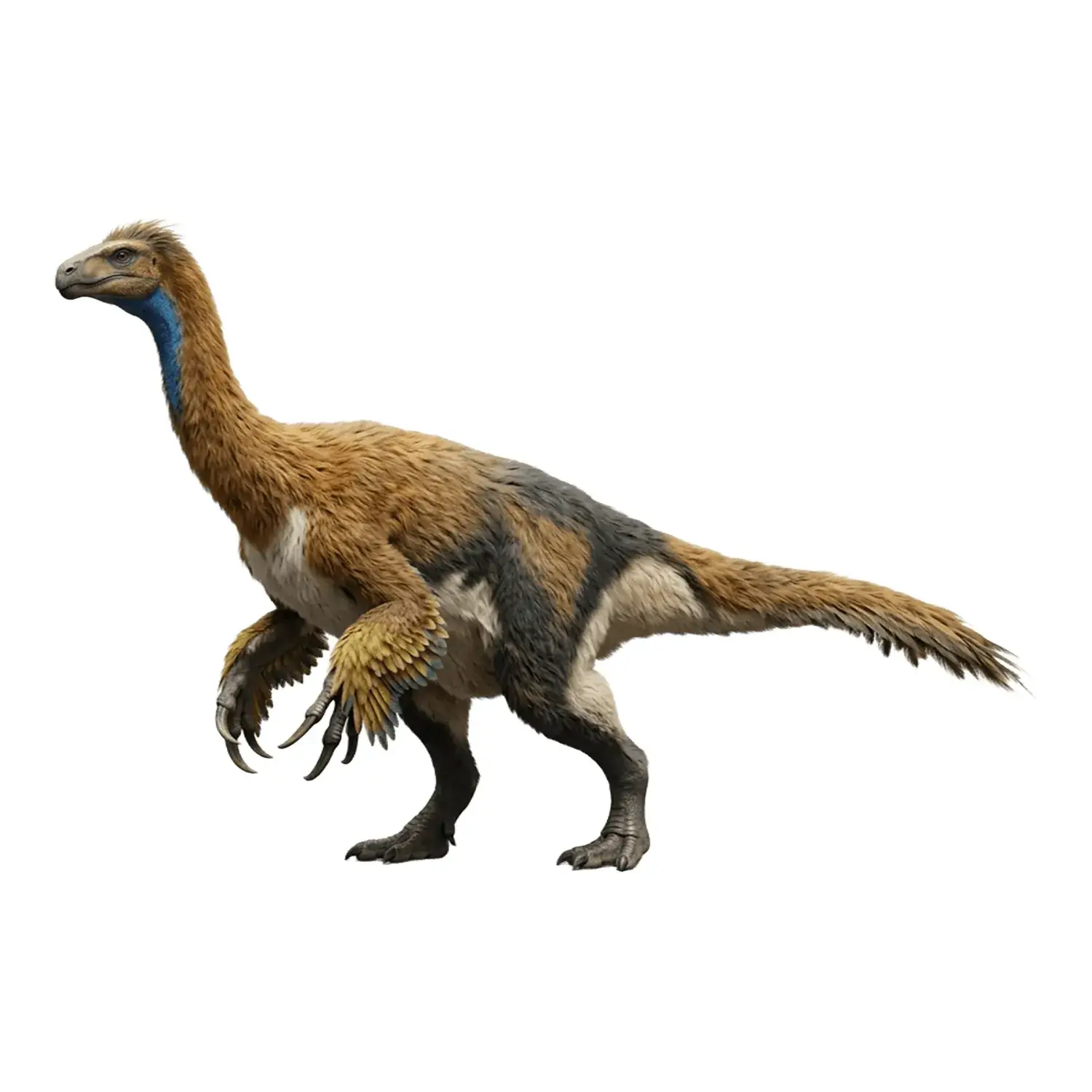
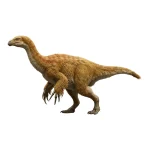
Alxasaurus (also known as Alxasaurus) was a herbivorous dinosaur that lived in what is now Inner Mongolia, China, during the Early Cretaceous.
It was a theropod belonging to the Therizinosauria, and its length is estimated at approximately 3.5 – 4 meters.
Therizinosaurs are known for their distinctive body shape, featuring long necks, large abdomens, and enormous claws.
However, many members of this group are known from fragmentary fossils, and their evolutionary relationships with other dinosaur groups were once poorly understood.
Under these circumstances, Alxasaurus was discovered with a relatively well-preserved skeleton, missing only the skull.
Its preserved bones proved valuable for research, making it an important dinosaur in helping scientists understand the classification and evolution of therizinosaurs.
Fossils Discovered in Inner Mongolia and the Origin of Its Name
Alxasaurus fossils were discovered in 1988 in the Alxa region of Inner Mongolia, China.
In 1993, it was formally described and recognized as a new species by Russian paleontologist Sergei Kurzanov, Chinese paleontologist Dong Zhiming, Canadian paleontologist Dale Russell, and others.
Its scientific name is Alxasaurus elesitaiensis.
The genus name comes from the Alxa region, where the fossils were discovered, and means “Alxa lizard.”
The species name is derived from the name of a village near the fossil discovery site.
The discovered specimens included vertebrae, ribs, a scapula, arm bones, the pelvis, and hindlimb bones.
Although most of the skull was missing, the fossils provided important information for reconstructing its overall body structure.
A Distinctive Body Shape with a Long Neck and Large Abdomen
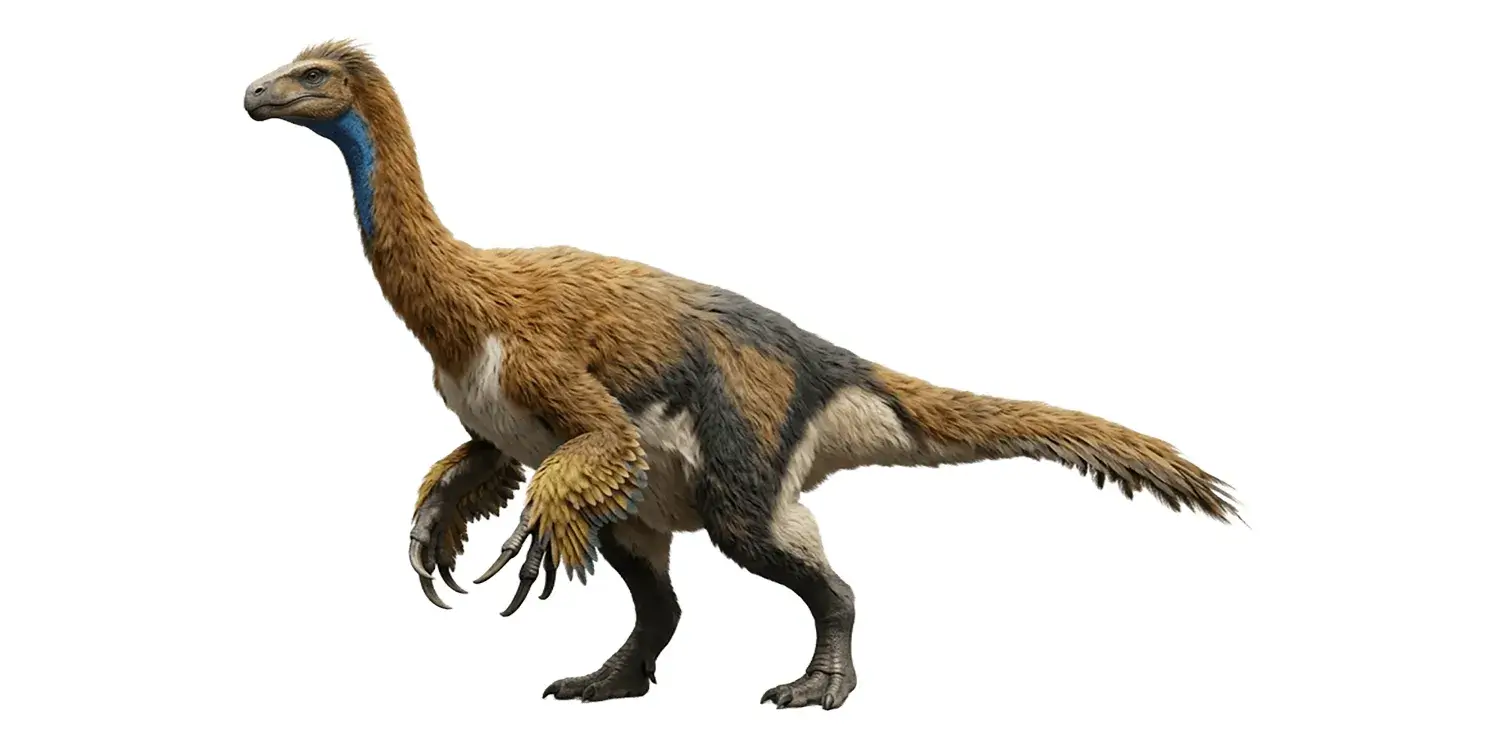
Alxasaurus is estimated to have been approximately 3.5 – 4 meters long.
Unlike slender carnivorous dinosaurs, it had a large, rounded torso, a long neck, and a relatively short tail.
It also had relatively long forelimbs with claws on its hands.
However, these claws are thought to have been relatively short, rather than extremely long like those of the later Therizinosaurus.
Its feet were broad, which may have helped distribute its weight when walking across wetlands or soft ground.
Taken together, these features suggest a plant-eating dinosaur that used its long neck to reach vegetation while its large torso accommodated the digestive system needed to process plant matter.
Clues Revealing That Therizinosaurs Were Theropods
One of the main reasons Alxasaurus is considered particularly important in paleontology is that it provided clues to the evolutionary position of therizinosaurs.
Therizinosaurs possessed features such as long necks, large abdomens, and well-developed forelimbs, resembling those of sauropods and early sauropodomorphs.
For this reason, they were once thought to belong to a group distinct from carnivorous dinosaurs.
However, studies of the relatively well-preserved Alxasaurus skeleton provided important evidence supporting the classification of therizinosaurs as theropods.
Today, therizinosaurs are considered a lineage of theropods related to dinosaurs such as Tyrannosaurus and birds. Within this group, they are thought to have evolved distinctive adaptations for a herbivorous diet.
Alxasaurus retains many primitive features of early therizinosaurs, making it an important dinosaur for understanding the evolution of later species such as Erlikosaurus and Therizinosaurus.