Stegouros
Name Origin
Roof Tail
Classification
Diapsida, Ornithischia, Thyreophora
Habitat (Discovery Location)
Chile
Period
Approximately 74.9 - 71.7 million years ago (Late Cretaceous)
Length
Approximately 1.8 - 2 meters
Diet
Herbivore (Plant-eater)
TODAY'S QUIZ
Correct answer = 1 coin
How was Stegouros’s tail different from the typical club-shaped tail found in many ankylosaurs?
Loading…
You might also like... 

-
 Caihong
- Classification
- Theropods
- Characteristics
- Carnivorous
- Feathered
- Era
- Jurassic period
- Yunnanosaurus
- Classification
- Sauropods
- Characteristics
- Herbivorous
- Era
- Jurassic period
- Gigantoraptor
- Classification
- Theropods
- Characteristics
- Omnivorous
- Era
- Cretaceous period
- Juravenator
- Classification
- Theropods
- Characteristics
- Carnivorous
- Era
- Jurassic period
-
Sponsored Links
-
Sponsored Links










Description
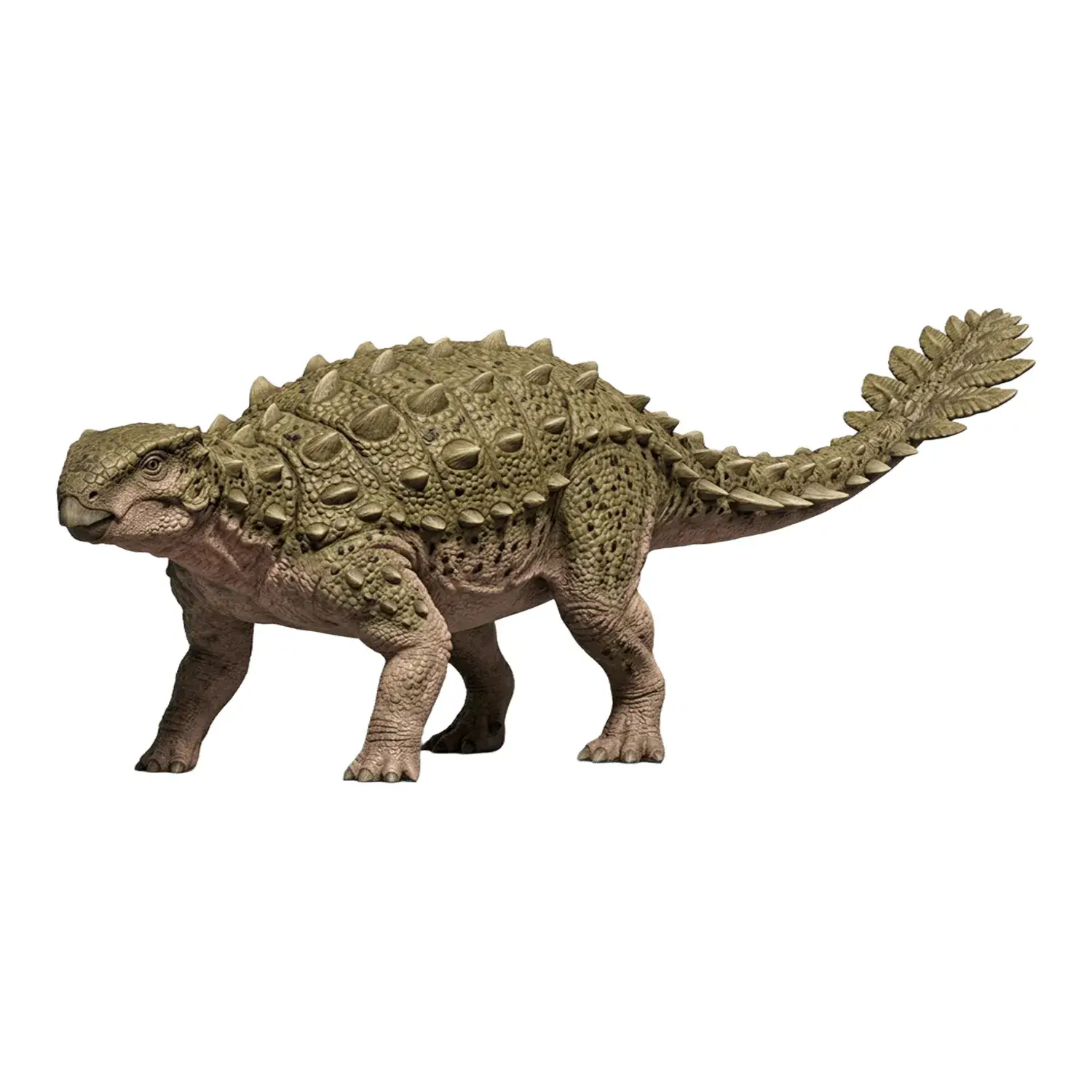
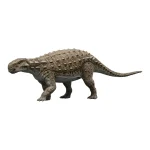
Stegouros was a small armored dinosaur that lived in South America during the Late Cretaceous.
It was a quadrupedal herbivore covered in bony armor and belonged to a group closely related to ankylosaurs.
Although it was relatively small, measuring approximately 1.8 – 2 meters in length, its most distinctive feature was the tip of its tail.
While some ankylosaurs had club-shaped tails formed by fused bones, Stegouros had a unique tail consisting of flattened bony plates arranged in a fan-like shape.
Its appearance has been compared to the weapon known as the “macuahuitl,” used by ancient Aztec warriors.
This unusual tail may have been used as a weapon to defend itself against predators such as carnivorous dinosaurs.
Stegouros also had ankylosaur-like features in its skull and tail, while its limbs and pelvis had characteristics resembling those of stegosaurs.
Its skeleton, combining features of multiple groups, provides important clues for studying the evolution of armored dinosaurs in the Southern Hemisphere.
Stegouros Fossils Discovered in Southern Chile and the Origin of Its Name
Stegouros lived approximately 74.9 – 71.7 million years ago, during the Late Cretaceous, in the Patagonia region of what is now southern Chile.
Its fossils were discovered in the Río de las Chinas Valley in Magallanes Region, southern Chile.
The rock formation belongs to the Dorotea Formation and is thought to date to the Campanian stage of the Late Cretaceous.
Its scientific name is Stegouros elengassen.
The genus name “Stegouros” combines the ancient Greek word “stegos,” meaning “roof,” and “oura,” meaning “tail,” giving it the meaning “roofed tail.”
The name refers to the distinctive bony plates that developed to cover the tip of its tail.
Meanwhile, the species name “elengassen” comes from a mythical armored creature appearing in the mythology of the Aónikenk Indigenous people who lived in the region where the fossil was discovered.
Stegouros is estimated to have been approximately 1.8 – 2 meters long and less than 60 centimeters tall.
Although reliable estimates of its weight are limited, it was relatively small for an armored dinosaur.
A Fossil Discovered in 2018 with Approximately 80% of Its Skeleton Preserved
Stegouros fossils were discovered in February 2018.
A research team conducting fieldwork in the Río de las Chinas Valley in southern Chile discovered the skeleton of a small armored dinosaur.
Subsequent excavation and analysis led to its formal description as a new genus and species in 2021 by a research team including Sergio Soto-Acuña and others.
The specimen is particularly valuable because of its excellent preservation.
The discovered fossil includes the skull, lower jaw, vertebrae, pelvis, hind limbs, and tail, with approximately 80% of its skeleton represented.
Armored dinosaurs often have their bony armor preserved scattered around their bodies, and specimens that allow researchers to examine their entire skeletal structure in detail are relatively rare.
In the case of Stegouros, many bones, including the vertebrae, pelvis, and limbs, were preserved together, allowing researchers to examine the structure of different parts of its body in detail.
In particular, the discovery of the distinctive weapon-like structure at the tip of its tail was a major scientific achievement.
Bony Armor Covering Its Body and a Small Build
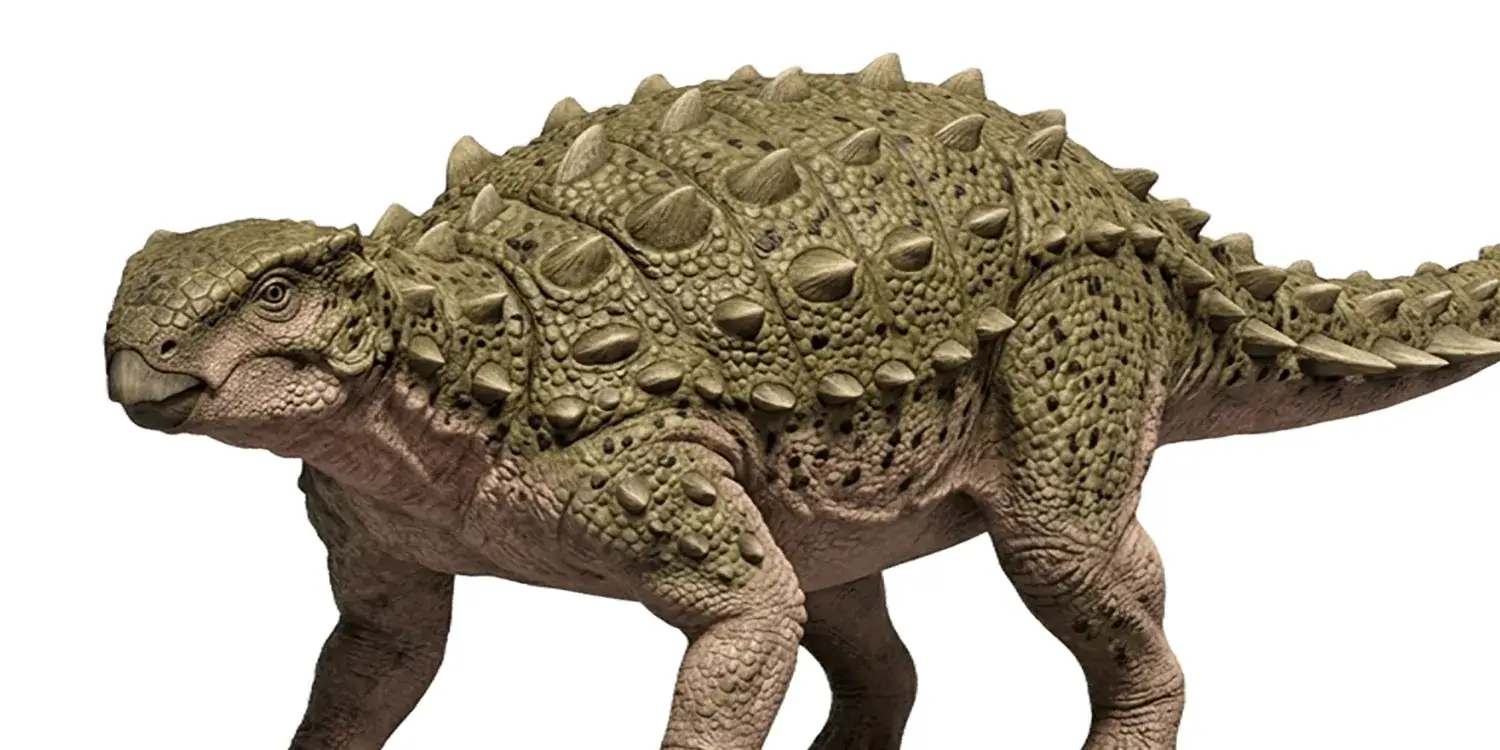
Stegouros was a quadrupedal herbivorous dinosaur with bony armor covering its head, torso, limbs, abdomen, and tail.
The armor consisted of structures called osteoderms, which are a type of bone that forms within the skin.
Many ankylosaurs developed these osteoderms as a means of protecting themselves from predators.
Several types of osteoderms have also been identified in Stegouros.
Its back and sides were covered with small bony clusters and raised, plate-like armor.
It also had spike-like osteoderms around its shoulders and hips, as well as a structure consisting of semicircular bony plates arranged around its neck.
However, it did not have the massive bony plates covering the back or the large horns on its head seen in Ankylosaurus and similar dinosaurs.
Its head armor was relatively flat, and it is thought to have lacked prominent horns or projections.
These features suggest that Stegouros may have represented a distinctive evolutionary stage before the development of the heavy armor seen in later ankylosaurids, such as Ankylosaurus.
Ankylosaur Features in Its Skull and Teeth
Stegouros is thought to have had a relatively large head compared with its body.
It had a bony beak at the tip of its snout and teeth in its lower jaw for eating plants.
The lower jaw teeth were leaf-shaped, with serrated projections along their front edges.
The shape of its teeth and the structure of its jaws show characteristics shared with other ankylosaurs.
Meanwhile, several openings and gaps were identified toward the rear of the skull, between the bones that made up the skull.
Whether it had prominent armor on the top of its head remains uncertain because the available fossil material is limited.
Interestingly, while its skull, teeth, and tail showed ankylosaur-like features, its limbs and pelvis, which supported the internal structure of its body, also retained characteristics resembling those of stegosaurs.
This combination of skeletal features is important for understanding the early evolution of thyreophorans.
Its Fan-Shaped Tail Resembled the Macuahuitl
The most distinctive feature that sets Stegouros apart from other armored dinosaurs is its tail.
Some ankylosaurs typically developed a hard mass of bone at the tip of their tails, forming a club-like weapon.
The tail of Ankylosaurus is a well-known example, and it is thought to have delivered powerful blows to carnivorous dinosaurs by swinging its hard tail club.
However, the tail of Stegouros was very different from this typical club-shaped structure.
It had relatively few tail vertebrae, with seven pairs of large osteoderm plates developing along the rear portion of the tail.
In particular, the posterior five pairs fused together as they grew, forming a continuous, flattened structure.
Viewed from above, these bony plates spread out in a fan-like shape, resembling a flat blade, with serrated projections along their edges.
This shape closely resembles a weapon known as the “macuahuitl,” used by ancient Aztec warriors.
The macuahuitl was a wooden weapon fitted with sharp blades made of obsidian or similar materials.
Because the edges of Stegouros’s flattened bony plates were lined with sharp projections, researchers have compared its tail to this weapon.
A distinctive joint structure was also identified inside its tail.
Toward the rear of the tail, the joints between the vertebrae fit together in a way that formed a structure that made the tip of the tail increasingly rigid.
This arrangement may have prevented the tail tip from deforming excessively during an attack and helped transfer force more effectively.
Was Its Distinctive Tail Used to Defend Against Carnivorous Dinosaurs?
The distinctive tail of Stegouros may have been used as a weapon to defend itself against predators.
During the Late Cretaceous, South America was home to carnivorous dinosaurs such as abelisaurids and megaraptorans.
These predators would have posed a significant threat to a small dinosaur like Stegouros.
It may have fought back by using the hard bony plates at the tip of its tail, in addition to protecting itself with body armor.
Unlike a typical club-shaped tail, the tail of Stegouros had a flattened, blade-like shape that spread outward. It may have been capable of injuring carnivorous dinosaurs by swinging it from side to side.
If it could target softer areas such as the legs or torso, it may also have been able to hinder a predator’s movements.
However, the exact angles and speeds at which it swung its tail, as well as the force of its attacks, cannot be fully determined from fossils alone.
Its tail may also have been used in fights between individuals of the same species.
It is possible that it served purposes other than defense against predators, such as disputes over territory or mating opportunities.
In any case, this specialized tail was undoubtedly an important evolutionary adaptation that made Stegouros distinctive.
A Parankylosaur with Features of Both Stegosaurs and Ankylosaurs
Stegouros belonged to Thyreophora, the group of dinosaurs that developed protective armor.
Thyreophorans have traditionally been divided into two major groups: Stegosauria, which includes Stegosaurus, and Ankylosauria, which includes Ankylosaurus.
Stegouros had features resembling ankylosaurs in its skull, teeth, and tail, while its limbs and pelvis retained characteristics similar to those of stegosaurs.
Based on detailed analysis of these features, Stegouros is classified in a distinct group called Parankylosauria.
Parankylosauria is a group of thyreophorans whose fossils have primarily been discovered in the Southern Hemisphere. Related dinosaurs include Antarctopelta and Kunbarrasaurus.
Stegouros is thought to have had a particularly close evolutionary relationship with Antarctopelta, which was discovered in Antarctica.
Both had features distinct from ankylosaurids such as Ankylosaurus, which thrived later in the Northern Hemisphere, and may have evolved along their own distinct path in the Southern Hemisphere.
However, the detailed evolutionary relationships within Parankylosauria and its precise position among ankylosaurs may be revised as future research progresses.
An Armored Dinosaur That Evolved Along a Distinct Path in Gondwana
During the Late Cretaceous, when Stegouros lived, Chile was part of South America, which formed a portion of the ancient supercontinent Gondwana.
At the time, the Southern Hemisphere was home to many dinosaurs that differed from those found in the Northern Hemisphere.
Among armored dinosaurs in particular, several groups had characteristics distinct from ankylosaurids such as Ankylosaurus, which thrived in the Northern Hemisphere.
Stegouros was one such dinosaur.
Its small body, measuring approximately 2 meters in length, combined with its distinctive tail weapon and body armor, made it very different from the large ankylosaurs of the Northern Hemisphere.
These differences provide an interesting example of how dinosaurs evolved along different paths in separate regions during a time when the northern and southern continents were divided.
Furthermore, because fossils representing approximately 80% of its skeleton have been discovered, Stegouros is an important specimen for studying the skeletal structure and evolution of armored dinosaurs in the Southern Hemisphere.