
Kunbarrasaurus
Name Origin
Shield Lizard
Classification
Diapsida, Ornithischia, Thyreophora
Habitat (Discovery Location)
Australia
Period
Early Cretaceous
Length
Approximately 2.5 - 3 meters
Diet
Herbivore (Plant-eater)
TODAY'S QUIZ
Correct answer = 1 coin
What do the tiny plant fragments found in Kunbarrasaurus’s stomach contents suggest about how it processed its food?
Loading…
You might also like... 

-
 Barosaurus
- Classification
- Sauropods
- Characteristics
- Herbivorous
- Era
- Jurassic period
- Incisivosaurus
- Classification
- Theropods
- Characteristics
- Herbivorous
- Feathered
- Era
- Cretaceous period
- Mapusaurus
- Classification
- Theropods
- Characteristics
- Carnivorous
- Era
- Cretaceous period
- Abelisaurus
- Classification
- Theropods
- Characteristics
- Carnivorous
- Era
- Cretaceous period
-
Sponsored Links
-
Sponsored Links












Description
Kunbarrasaurus was a herbivorous dinosaur that lived in Australia during the Early Cretaceous.
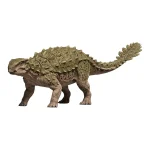
It was an ankylosaur, belonging to the same group as Ankylosaurus, and had bony armor covering its body.
One of its most remarkable features is that a well-preserved skeleton was discovered.
Many bones and armor plates remained intact, from the skull and torso to the limbs and tail, making it one of the particularly valuable dinosaur specimens discovered in Gondwana, including Australia.
Even more remarkably, its fossil preserved stomach contents.
It is an exceptionally rare dinosaur that provides clues about what it actually ate.
How It Was Described as a New Genus Separate from Minmi
Kunbarrasaurus fossils were discovered in September 1989 at Marathon Station near Richmond, Queensland, Australia.
The fossil was first discovered by Ian Evers, a local station manager.
The following year, in 1990, the fossil was recovered by an expedition led by paleontologist Ralph Molnar and others.
Initially, the specimen was thought to belong to a species of Minmi, a genus of ankylosaur known from Australia, and was referred to as “Minmi.”
However, subsequent detailed studies revealed distinctive features in its skull and skeleton.
In 2015, a research team led by Lucy Leahy formally described it as a new genus and species, Kunbarrasaurus ieversi.
The genus name “Kunbarrasaurus” comes from the language of the local Indigenous people, the Wunumara, combining “Kunbarra,” meaning “shield,” with “sauros,” the Greek word for “lizard.”
The species name “ieversi” honors Ian Evers, who first discovered the fossil.
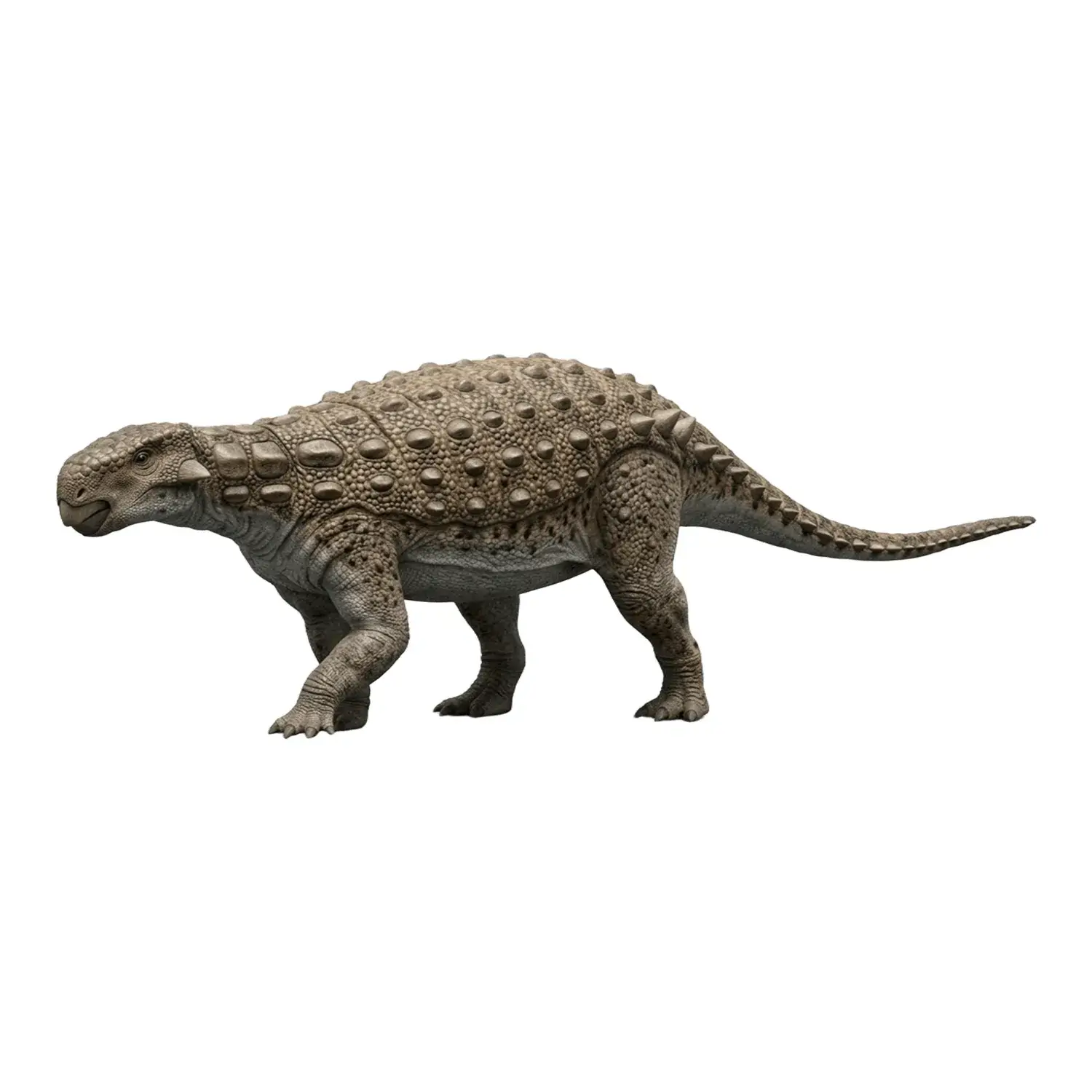
Bony Armor Covering Its Body, Which Measured Approximately 2.5 – 3 Meters in Length
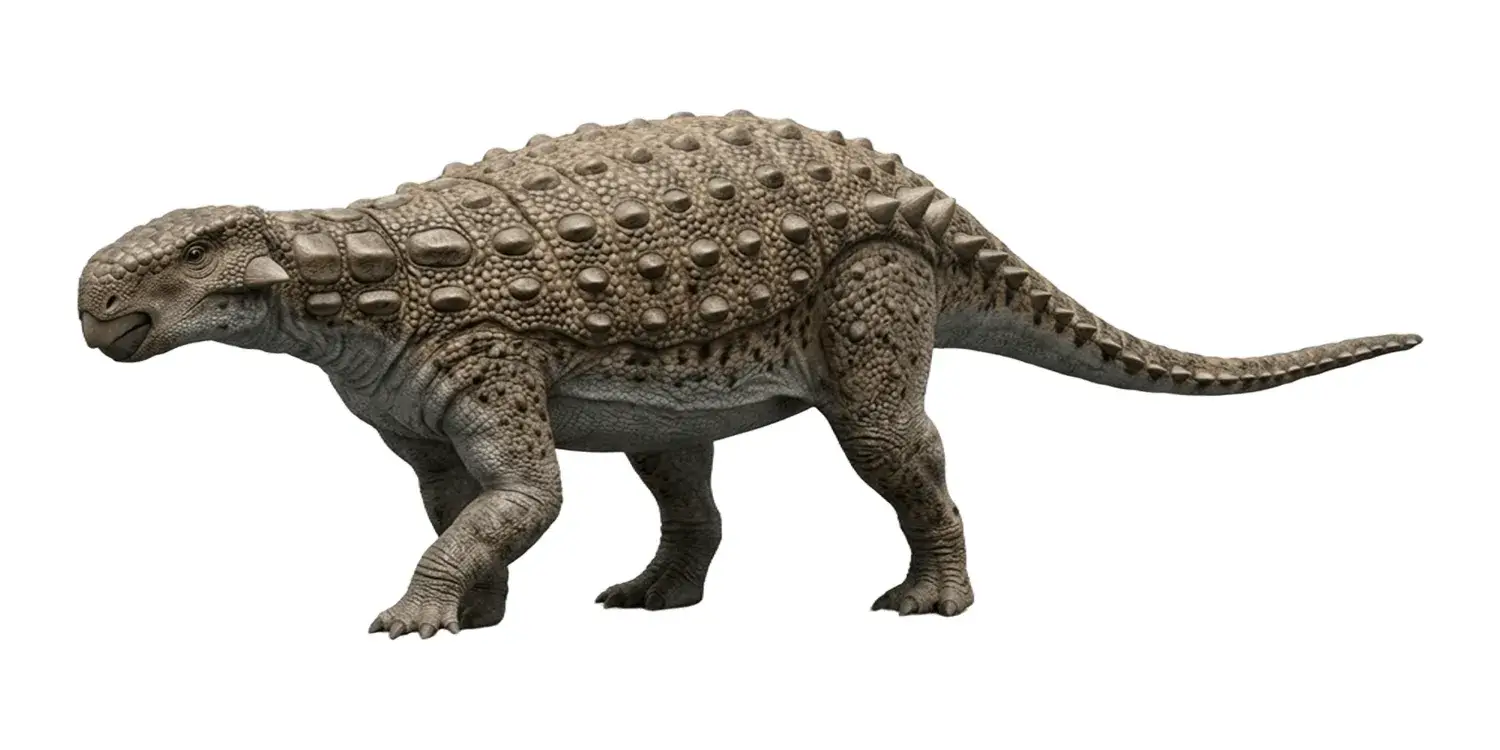
Kunbarrasaurus was a small ankylosaur estimated to have been approximately 2.5 – 3 meters long.
It was a herbivorous dinosaur that walked on four legs, with a relatively long tail and a sturdy body.
Its most distinctive feature was the well-developed bony armor covering various parts of its body, including the head, back, abdomen, limbs, and tail.
Bones that form within the skin are called osteoderms and are thought to have served as defensive structures to protect against predators.
Kunbarrasaurus had several types of osteoderms, including flat, plate-like armor, small bony clusters, and raised bony plates arranged along the sides of its body.
It also had spike-like armor around its shoulders and hips, as well as a defensive structure consisting of semicircular bony plates arranged around its neck.
However, it did not have a large tail club like that of Ankylosaurus.
Its head also lacked prominent horns or large projections and is thought to have been covered with relatively flat bony armor.
These features suggest that Kunbarrasaurus was a primitive ankylosaur specialized in protecting its body with armor.
What Kunbarrasaurus Ate, Revealed by Its Stomach Contents
One of the reasons Kunbarrasaurus is particularly noteworthy is that stomach contents were discovered in its fossil.
In most dinosaurs, the food they ate is not preserved in the fossil record.
However, the Kunbarrasaurus specimen contained material inside its abdomen that was thought to be plant-derived.
Analysis revealed that the stomach contents included plant fibers, fragments of leaf vascular bundles, fruits, seeds, and tissues thought to be fern sporangia.
In particular, the plant fibers and leaf fragments were extremely fine, with many measuring approximately 0.6 – 2.7 millimeters in length.
This suggests that Kunbarrasaurus may have fed by nibbling on plants and chewing them into small pieces in its mouth.
It is also thought that, rather than relying solely on gastroliths to grind plant material like many other herbivorous dinosaurs, food processing in its mouth played an important role as well.
Fossils that provide direct evidence of what dinosaurs actually ate are extremely valuable.
Kunbarrasaurus serves as an important source of information for understanding the diets of herbivorous dinosaurs during the Cretaceous.
Why a Land-Dwelling Ankylosaur Was Discovered in Marine Deposits
The geological formation in which the Kunbarrasaurus skeleton was discovered was originally formed in a marine environment.
Why was the fossil of an ankylosaur that lived on land discovered in marine deposits?
Researchers suggest that after the individual died, it may have been carried to the sea by currents from rivers or other waterways before sinking to the seafloor.
Interestingly, the discovered skeleton was preserved in relatively good condition, with many armor plates and bones remaining close to their original positions.
It is also possible that gases produced during decomposition after death created buoyancy, delaying the time it took for the carcass to sink to the seafloor.
Furthermore, no clear bite marks or tooth marks have been found on the fossil.
This suggests that the skeleton may have been preserved without being scavenged by large predators or scavengers after death.
The discovery of a land-dwelling dinosaur that was carried into the sea after death and fossilized there is an interesting example that helps us understand the natural environment of the time and the process of fossil preservation.
Kunbarrasaurus Classification and Ongoing Research into Its Evolution
Kunbarrasaurus was previously thought to belong to the genus Minmi, but a reexamination in 2015 established it as a distinct dinosaur.
More recently, some researchers have proposed classifying it in a group called Parankylosauria, together with Stegouros and Antarctopelta.
However, researchers have differing views on the evolutionary relationships within this group. A 2025 study also reported results placing it closer to the family Nodosauridae and Polacanthus-like ankylosaurs.
Therefore, the precise evolutionary position of Kunbarrasaurus remains a subject of ongoing research.